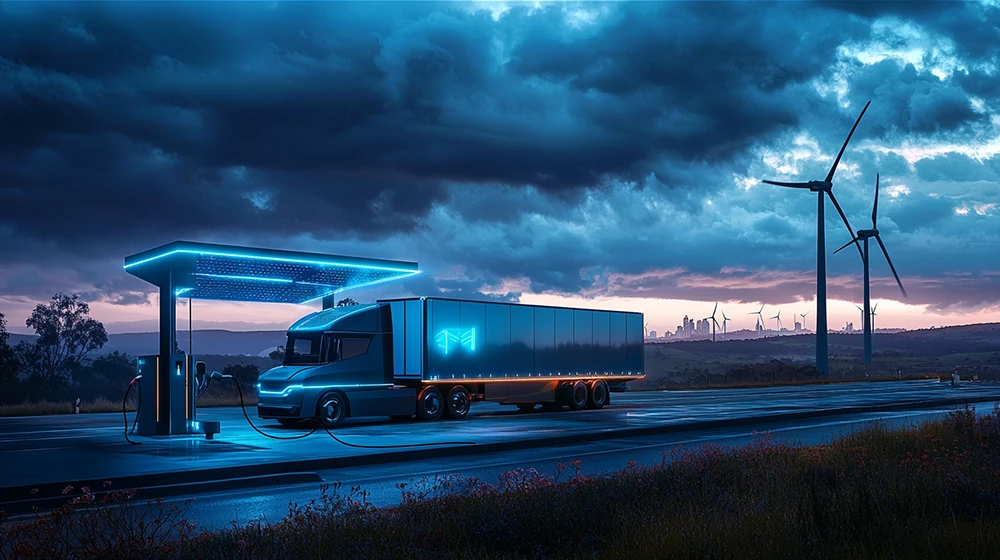
If you’ve been following the industry news lately, you know that green logistics isn’t just a trendy buzzword anymore – it’s rapidly becoming a business imperative. With mounting pressure from consumers, regulators, and investors, Australia’s trucking industry is facing its biggest transformation since the introduction of diesel engines.
Today, we’re taking a comprehensive look at Australia’s journey toward zero-emission trucking. We’ll explore the technologies that are making this possible, the infrastructure challenges we face across our vast continent, and the practical steps fleet operators can take to prepare for this greener future.
The Why: Driving Forces Behind Australia’s Green Logistics Revolution
Before diving into the how, let’s talk about why Australia’s trucking industry is embracing this green transformation:
Climate Commitments
Australia has committed to reducing greenhouse gas emissions by 43% below 2005 levels by 2030 and achieving net zero emissions by 2050. With transport accounting for approximately 18% of Australia’s emissions – and heavy vehicles responsible for about 23% of that – our industry has a significant role to play in meeting these targets.
Economic Imperatives
The economics of zero-emission vehicles are rapidly improving. While purchase prices remain higher than conventional trucks, the total cost of ownership (TCO) is becoming competitive thanks to lower operational costs. According to the Electric Vehicle Council of Australia, electric truck owners can expect to save up to 40% on maintenance costs and significant savings on fuel, especially as diesel prices continue to rise.
Corporate Sustainability Goals
Major Australian companies are setting ambitious sustainability targets, with many committing to net-zero supply chains by 2040 or earlier. This means logistics providers who can offer low or zero-emission transport services will have a competitive advantage in securing contracts from these environmentally conscious clients.
Social Licence
Communities across Australia are increasingly concerned about air quality and noise pollution. Zero-emission trucks not only reduce carbon emissions but also eliminate particulate matter and NOx emissions that harm human health, while significantly reducing noise pollution in urban areas.
The What: Zero-Emission Technologies for Australian Trucking
When we talk about zero-emission trucking, we’re looking at several competing technologies. Each has its strengths and challenges, especially in the Australian context:
Battery Electric Vehicles (BEVs)
Battery electric trucks use large battery packs to power electric motors. They produce zero tailpipe emissions and are highly energy-efficient.
Advantages for Australia:
- Ideal for urban and regional delivery routes where vehicles return to base daily
- Simplicity of powertrain means fewer moving parts and lower maintenance costs
- Can be charged using Australia’s growing renewable energy capacity
- Perfect for noise-sensitive urban operations (night deliveries, residential areas)
Challenges in Australia:
- Limited range (currently 200-400km for most models) challenging for long-haul routes
- Heavy batteries reduce payload capacity under Australia’s mass regulations
- Charging infrastructure is still limited outside major cities
- Long charging times (typically 1-4 hours) impact operational efficiency
Notable examples include the SEA Electric trucks being manufactured in Victoria and the Volvo FL Electric, which is already undergoing trials with Linfox and Australia Post.
Fuel Cell Electric Vehicles (FCEVs)
Fuel cell trucks generate electricity on-board by combining hydrogen with oxygen, producing only water as a byproduct.
Advantages for Australia:
- Longer range than battery electric (typically 500-800km)
- Faster refuelling (similar to diesel, around 15 minutes)
- Well-suited to Australia’s long-haul transport routes
- Potential to leverage Australia’s abundant renewable energy resources for green hydrogen production
Challenges in Australia:
- Almost non-existent hydrogen refuelling infrastructure
- Higher vehicle cost compared to both diesel and battery electric
- Currently limited vehicle availability in Australia
- Green hydrogen production capacity is still in its infancy
Hyundai’s XCIENT Fuel Cell trucks are among the first being trialled in Australia, with a partnership announced with Coregas in NSW to deploy hydrogen-powered prime movers for short-haul operations.
Renewable Natural Gas and Biofuels
While technically not zero-emission at the tailpipe, biofuels and renewable natural gas can achieve net-zero or even negative lifecycle emissions if sourced correctly.
Advantages for Australia:
- Can use modified conventional engines, reducing transition costs
- Existing distribution infrastructure can be utilised
- Potential for local production using Australia’s agricultural waste
- Easier transition for fleet operators and drivers
Challenges in Australia:
- Limited availability of sustainable feedstock
- Competition for bioresources from other sectors
- Still produce some local air pollutants
- May be seen as a transitional rather than long-term solution
Several Australian companies, including Cleanaway, are exploring biomethane solutions produced from landfill gas and organic waste for their truck fleets.
The Verdict on Technologies
There is no “one-size-fits-all” solution for Australia’s diverse trucking operations. Most experts agree the future will include a mix of these technologies, with:
- Battery electric dominating urban and regional delivery (under 300km daily range)
- Hydrogen fuel cells capturing much of the long-haul market (especially routes over 500km)
- Biofuels and renewable gases serving as transitional solutions and filling specific niches
According to research from CSIRO’s National Hydrogen Roadmap, we can expect this mixed technology approach to persist through at least 2040, with specific applications determining the most suitable zero-emission solution.
The How: Building Australia’s Green Trucking Infrastructure
The transition to zero-emission trucking depends heavily on infrastructure development. Here’s where Australia stands and what we need to build:
Electric Charging Infrastructure
Australia currently has over 3,000 public EV charging locations, but very few are designed for heavy vehicles. To support electric trucking, we need:
Depot Charging
Most electric trucks will charge overnight at depots. This requires:
- Significant power upgrades to many logistics facilities
- Smart charging systems to manage electricity demand
- Potentially on-site renewable generation and storage
Public Fast-Charging Network
For routes beyond a single charge range:
- Ultra-fast chargers (350kW+) along major freight corridors
- Standardized charging interfaces compatible with multiple truck brands
- Facilities designed for truck dimensions and weight
The Australian Government’s Future Fuels Fund is supporting the development of heavy vehicle charging infrastructure, but industry estimates suggest we’ll need 10-15 times the current investment to support widespread adoption.
Hydrogen Refuelling Network
Australia’s hydrogen refuelling infrastructure is in its earliest stages, with just a handful of demonstration stations operational.
A comprehensive network would require:
- Production facilities (ideally using renewable energy)
- Distribution systems (pipelines or trucking)
- Refuelling stations along major freight routes
The Australian Hydrogen Council estimates we’ll need at least 100 hydrogen refuelling stations strategically placed across the country to support long-haul hydrogen trucking operations.
Electricity Grid Upgrades
Both electric trucks and green hydrogen production place new demands on our electricity grid:
- Local distribution networks may need reinforcement to handle depot charging
- Remote renewable generation will require new transmission infrastructure
- Grid storage will be essential to balance variable renewable supply with charging demand
The Australian Energy Market Operator’s Integrated System Plan outlines the significant transmission investments needed, many of which will directly benefit zero-emission trucking infrastructure.
Government Incentives and Regulation: The Policy Landscape
Government policy will play a crucial role in accelerating Australia’s transition to zero-emission trucking. Here’s the current landscape:
Federal Initiatives
- Future Fuels Fund: Providing $250 million to help businesses integrate new vehicle technologies
- Australian Renewable Energy Agency (ARENA): Funding hydrogen and electric truck demonstration projects
- Clean Energy Finance Corporation: Offering favourable financing for zero-emission vehicle fleets
- Modern Manufacturing Initiative: Supporting domestic manufacturing of zero-emission vehicles and components
State Programs
- NSW Electric Vehicle Strategy: Includes $171 million for heavy vehicle charging infrastructure
- Victorian Zero Emissions Vehicle Roadmap: Offers $20 million for zero-emission freight initiatives
- Queensland Hydrogen Industry Strategy: Focusing on hydrogen production and refuelling infrastructure
- Western Australia Renewable Hydrogen Strategy: Leveraging WA’s renewable resources for hydrogen production
Regulatory Developments
- Euro VI Emission Standards: Being phased in for new heavy vehicles, indirectly encouraging zero-emission alternatives
- Carbon Credit Schemes: Potential inclusion of transport in expanded safeguard mechanism
- Road User Charging Reform: Likely to replace fuel excise with distance-based charging as zero-emission adoption increases
Industry experts predict that Australia will follow Europe’s lead in setting firm end dates for the sale of new diesel trucks, possibly as early as 2035 for some vehicle categories.
The Timeline: Australia’s Zero-Emission Trucking Roadmap
When will Australia’s trucking fleet become zero-emission? The transition will be gradual, with different segments adopting at different rates:
Phase 1: 2023-2026 (Early Adoption)
- Urban delivery vehicles transition first (particularly last-mile delivery)
- Demonstration projects for regional and long-haul applications
- Infrastructure development focused on depot charging and limited public facilities
- 5-10% of new truck sales being zero-emission by 2026
Phase 2: 2026-2030 (Accelerated Growth)
- Regional delivery routes increasingly served by zero-emission vehicles
- Initial adoption in long-haul for specific corridors with infrastructure
- Major fleet operators setting and implementing transition targets
- 15-30% of new truck sales being zero-emission by 2030
Phase 3: 2030-2035 (Mainstream Adoption)
- Zero-emission options available for virtually all applications
- Comprehensive charging and hydrogen refuelling networks established
- Economic advantage shifting decisively toward zero-emission technologies
- 40-70% of new truck sales being zero-emission by 2035
Phase 4: 2035-2050 (Completion)
- End of sales of new diesel trucks in most categories
- Remaining diesel fleet gradually retired
- Complete zero-emission freight network established
- Close to 100% of new truck sales being zero-emission by 2040
This timeline aligns with projections from Transport for NSW’s Electric and Hybrid Vehicle Plan, though actual adoption rates will depend on technology development, infrastructure investment, and policy support.
Industry Pioneers: Australian Success Stories
Several Australian companies are already leading the way in zero-emission trucking:
Woolworths Group
Australia’s largest retailer has committed to transitioning its entire transport fleet to electric vehicles by 2030. They’ve already deployed several SEA Electric trucks for home deliveries and are installing charging infrastructure at distribution centres nationwide.
Linfox
This logistics giant is trialling both battery electric and hydrogen trucks. Their partnership with Volvo has put the FL Electric into operation in Melbourne, while they’re also participating in hydrogen truck trials in Queensland. Linfox has committed to a 50% reduction in emissions by 2030.
Australia Post
With the nation’s largest delivery fleet, Australia Post has become an early adopter of electric delivery vehicles. They currently operate over 3,000 electric vehicles (mostly smaller delivery vehicles), but are expanding into medium-duty electric trucks for regional parcel delivery.
Toll Group
Toll is investing in biofuel solutions while simultaneously trialling battery electric trucks for urban operations. Their sustainability strategy includes a 25% emissions reduction by 2030 and exploring vehicle-to-grid technology at their facilities.
Practical Steps: How Your Fleet Can Prepare
If you’re operating a trucking fleet in Australia, here are practical steps to prepare for the zero-emission future:
1. Assess Your Operations
Begin by analyzing your routes, loads, and operational patterns:
- Which routes have predictable, shorter daily distances suitable for electric?
- Where do vehicles return to base daily, enabling overnight charging?
- Which applications have weight-sensitive loads that might be challenging with heavy batteries?
2. Start Small and Learn
Consider implementing pilot projects:
- Replace 1-2 vehicles in urban operations with electric alternatives
- Partner with vehicle suppliers offering trial programs
- Document performance, challenges, and driver feedback
3. Develop Charging/Refuelling Strategy
For depot-based operations:
- Engage with your electricity provider early to understand grid constraints
- Consider solar and battery installation to offset charging costs
- Investigate smart charging systems to minimize demand charges
4. Driver and Technician Training
Zero-emission trucks require new skills:
- Drivers need training in regenerative braking and range optimization
- Technicians need high-voltage safety training for electric vehicles
- Hydrogen requires specific safety protocols and training
5. Explore Funding Options
Take advantage of available support:
- Apply for government grants for vehicles and infrastructure
- Investigate green financing options from banks with sustainability commitments
- Consider operating leases that mitigate technology risk
6. Plan Infrastructure Upgrades
Future-proof your facilities:
- Include conduit and electrical capacity for charging in any new construction
- Reserve space for future hydrogen storage if appropriate
- Design flexible facilities that can accommodate evolving technologies
The Economics: When Does Zero-Emission Trucking Make Financial Sense?
While environmental benefits are clear, the business case for zero-emission trucking in Australia is becoming increasingly compelling:
Total Cost of Ownership Analysis
According to research from the Australian Trucking Association, the total cost of ownership crossover points (where zero-emission becomes cheaper than diesel) are estimated as:
- Urban Delivery: Already approaching parity in 2023 for specific applications
- Regional Distribution: Expected parity around 2025-2027
- Long-Haul: Reaching parity around 2027-2030 for battery electric, 2028-2032 for hydrogen
These estimates account for:
- Higher upfront vehicle costs (currently 2-3x diesel equivalents)
- Lower operational costs (energy and maintenance)
- Reduced downtime and longer vehicle life
- Current incentives and grants
Key Economic Drivers
Factors accelerating the economic case include:
- Battery Cost Reduction: Expected to continue falling 5-8% annually
- Electricity Costs: Especially favourable for fleets with on-site solar
- Diesel Prices: Rising fuel costs improve comparative economics
- Maintenance Savings: 40-60% lower maintenance costs for electric powertrains
- Carbon Pricing: Direct or indirect costs of emissions increasingly factored into business decisions
Challenges and Solutions: Overcoming Barriers to Adoption
Despite the promising outlook, significant challenges remain for Australia’s zero-emission trucking transition:
Range Anxiety and Route Planning
Challenge: Limited range of current zero-emission trucks compared to diesel.
Solutions:
- Advanced route planning software optimizing for energy usage
- Strategic placement of opportunity charging/refuelling locations
- Battery swapping concepts being trialled for specific applications
- Hybrid solutions for transitional period (e.g., range-extended electric)
Upfront Costs
Challenge: Significantly higher purchase price of zero-emission trucks.
Solutions:
- Government incentives reducing initial purchase gap
- Innovative financing models (pay-as-you-save, battery leasing)
- Recognition of higher residual values in financing calculations
- Consideration of total cost of ownership rather than purchase price
Infrastructure Availability
Challenge: Limited charging and hydrogen refuelling infrastructure.
Solutions:
- Industry collaboration on shared infrastructure
- Public-private partnerships for network development
- Modular, scalable designs allowing gradual expansion
- Interim solutions like mobile charging and refuelling
Grid Capacity
Challenge: Local electricity networks may be constrained.
Solutions:
- On-site renewable generation and battery storage
- Smart charging managing demand peaks
- Vehicle-to-grid services providing revenue opportunities
- Coordination with distribution network upgrades
The Future: Beyond Zero-Emission Propulsion
Looking beyond just changing the powertrain, the zero-emission transition will likely coincide with other transformative technologies:
Automation and Zero-Emission Synergies
Autonomous driving technology complements zero-emission powertrains:
- Optimized driving patterns maximizing range
- Coordinated charging/refuelling minimizing infrastructure requirements
- Predictable operations well-suited to current range limitations
Digitalization and Efficiency
Digital technologies enhancing zero-emission operations:
- AI-powered route optimization reducing energy consumption
- Predictive maintenance preventing energy-wasting component failures
- Digital freight matching reducing empty running
- Blockchain verifying green credentials for customers
Advanced Materials and Design
Purpose-built zero-emission trucks will evolve to:
- Lightweight materials offsetting battery weight
- Aerodynamic designs specifically optimizing for electric range
- Modular approaches separating powertrain from cargo sections
Conclusion: Australia’s Green Logistics Future
Australia’s pathway to zero-emission trucking presents both significant challenges and extraordinary opportunities. Our unique geography, climate, and infrastructure create hurdles not faced in other markets, but they also drive innovation and adaptation.
The transition won’t happen overnight – diesel trucks will remain part of Australia’s logistics landscape for years to come – but the direction is clear. Forward-thinking fleet operators are already planning their zero-emission journey, even if they’re taking measured first steps.
What’s particularly exciting is that this transition aligns environmental benefits with long-term economic advantages. While early adoption requires investment and adaptation, the operational savings, brand benefits, and competitive advantages will ultimately reward those who embrace this change.
For Australia’s trucking industry, going green isn’t just about meeting climate commitments – it’s about maintaining competitiveness in a rapidly evolving global market. As international supply chains increasingly demand carbon accountability, Australian operators with zero-emission credentials will have a decisive advantage.
The road to zero-emission trucking may be challenging, but Australia’s logistics industry has never shied away from challenges. From navigating vast distances to embracing technological change, adaptation is in our industry’s DNA.
At Embrace the Future, we’re committed to helping Australia’s trucking and logistics operators navigate this exciting transition. Whether you’re taking your first steps toward sustainability or advancing an established green logistics program, we’re here to provide the insights, connections, and practical guidance you need.
The future of Australian trucking isn’t just zero-emission – it’s more efficient, more innovative, and ultimately more profitable. The journey has begun, and we’re excited to be along for the ride.
Additional Resources
For more information on zero-emission trucking in Australia, check out these authoritative resources:
- Electric Vehicle Council of Australia – The national body representing the electric vehicle industry, with specific resources for heavy vehicles.
- CSIRO’s National Hydrogen Roadmap – Comprehensive research on hydrogen applications in Australian transport.
- Transport for NSW Electric and Hybrid Vehicle Plan – State government strategy for zero-emission transport infrastructure.
- Australian Renewable Energy Agency (ARENA) – Information on funding opportunities for zero-emission transport projects.