The Last Mile Revolution: How Technology is Transforming Urban Delivery in Australia

In the rapidly evolving world of logistics and transportation, the “last mile” has become the most crucial—and challenging—link in the supply chain. This final leg of delivery, from distribution center to doorstep, accounts for up to 53% of total shipping costs and plays a decisive role in customer satisfaction. Across Australia’s growing urban centers, the last mile is undergoing nothing short of a revolution, driven by technological innovation, changing consumer expectations, and the relentless growth of e-commerce.

This transformation isn’t just affecting parcel delivery; it’s reshaping how everything moves through our cities, from grocery deliveries to furniture transportation and home relocations. Let’s explore how technology is reinventing urban delivery in Australia and what it means for businesses and consumers alike.

The Urban Delivery Challenge

Australia presents unique last-mile challenges. Our major cities are sprawling metropolises with varying density patterns, from the compact inner suburbs of Sydney to the expansive urban footprint of Brisbane. According to Australia Post’s 2023 E-Commerce Industry Report, online shopping has grown by over 80% since 2019, with Australians now receiving an average of 22 parcels per person annually.

This e-commerce boom has collided with several urban challenges:

  • Traffic congestion: Australia’s major cities consistently rank among the most congested in the Asia-Pacific region
  • Limited parking: Delivery vehicles in dense urban cores struggle to find legal stopping options
  • Customer expectations: 65% of Australian consumers now expect same-day or next-day delivery options
  • Environmental concerns: Traditional delivery methods contribute significantly to urban emissions and noise pollution

For larger items and full home relocations, these challenges are even more pronounced. Moving companies in Sydney have reported that travel times for moves within the city have increased by nearly 30% over the past decade due to worsening congestion. This is where specialized services like professional Sydney removalists have become invaluable, as they bring route optimization expertise and local knowledge that can significantly reduce urban moving hassles.

Micro-Fulfillment: Bringing Inventory Closer to Customers

One of the most significant shifts in urban logistics has been the emergence of micro-fulfillment centers (MFCs). These compact, highly automated facilities are strategically positioned within urban areas, dramatically reducing the distance goods must travel to reach customers.

Woolworths and Coles have been pioneers in this space, converting portions of existing supermarkets into automated micro-fulfillment operations for online orders. These systems can process an order in under 15 minutes, supporting rapid delivery within a 5-10 km radius.

For larger goods and furniture delivery, a similar trend is emerging. Urban warehousing facilities that once served retail stores are being repurposed as last-mile delivery hubs. This transformation has created new opportunities and challenges for businesses needing to relocate inventory and operations.

“The shift to distributed fulfillment models has triggered a surge in commercial relocations,” explains logistics consultant Emma Chen. “Companies are moving from centralized distribution centers to networks of smaller facilities throughout metropolitan areas.”

This trend has been particularly evident in Melbourne, where industrial property on the urban fringe has seen growing demand. When businesses make these strategic relocations, they often turn to specialized commercial movers like those found through Melbourne removalist services to handle the complex logistics of relocating inventory systems and equipment.

Specialized Transport Solutions for Different Delivery Types

The one-size-fits-all approach to delivery is rapidly disappearing. Today’s logistics companies are deploying purpose-built solutions for different types of goods:

Small Parcels and Documents

Delivery robots and drones are no longer futuristic concepts but real solutions being tested in Australian cities. Starship Technologies has piloted sidewalk delivery robots in select Brisbane neighborhoods, while Wing (owned by Alphabet) has conducted extensive drone delivery trials in Canberra and Logan, Queensland, completing over 100,000 deliveries.

Grocery and Meal Delivery

Temperature-controlled electric vehicles and purpose-built delivery bags have transformed food logistics. Companies like DoorDash and Deliveroo utilize AI to batch multiple orders going in similar directions, significantly improving efficiency.

Furniture and Appliances

For larger items, specialized delivery solutions incorporate technology in different ways. Digital measuring tools can verify doorway and elevator dimensions before delivery, while AR applications help customers visualize items in their space before purchase.

“The expertise required for safely moving large items through urban environments can’t be underestimated,” notes James Thornton, a logistics safety consultant. “There’s a reason why professional moving services continue to thrive alongside app-based delivery options—experience and proper equipment matter tremendously when handling valuable furniture.”

This specialized knowledge is particularly important in Brisbane’s varied architectural landscape, from elevated Queenslanders to modern high-rises. Services like Brisbane removalists bring crucial expertise for navigating these challenges when moving larger items throughout the city.

The Gig Economy’s Impact on Urban Delivery

The rise of platforms like Uber, Airtasker, and Amazon Flex has introduced a new dynamic to urban delivery: the gig worker. These platforms use sophisticated algorithms to match available drivers with delivery requests in real-time, creating a scalable delivery force that expands and contracts with demand.

This model has proven particularly effective for handling delivery surge periods. During the pandemic, Amazon Flex reported a 200% increase in driver applications in Australia as workers sought alternative income sources.

However, the gig model has clear limitations:

  • Equipment constraints: Most gig workers use personal vehicles unsuitable for larger items
  • Training gaps: Limited formal training can result in higher damage rates for fragile items
  • Consistency challenges: Service quality can vary significantly between different gig workers

“There’s room in the ecosystem for both gig economy platforms and traditional professional services,” explains Dr. Maya Kelvin, who researches urban logistics at RMIT. “They serve different needs. You might use an app-based service for a small package, but when moving valuable furniture or relocating an entire home, most consumers still prefer professional movers with proper equipment and insurance.”

Route Optimization: AI’s Growing Role in Urban Delivery

Perhaps the most transformative technology in last-mile logistics isn’t the most visible one: artificial intelligence powering sophisticated route optimization.

Modern delivery route planning goes far beyond traditional GPS navigation. Today’s systems incorporate:

  • Real-time traffic data: Adjusting routes dynamically as traffic conditions change
  • Weather impact modeling: Rerouting based on predicted weather events
  • Historical delivery success patterns: Learning from past deliveries to optimize future ones
  • Driver expertise integration: Incorporating driver knowledge of local shortcuts and challenges
  • Parking availability predictions: Guiding drivers to likely available stopping locations

Australian logistics company GetSwift has been a pioneer in this space, developing AI route optimization that has reduced delivery times by up to 25% for its clients.

For moving companies handling multiple pickups and deliveries, these technologies have transformed scheduling and planning. This technological edge has become a competitive advantage for modern moving services, allowing them to provide more accurate time estimates and efficient service.

Electric and Alternative Vehicles Transforming Urban Delivery

The shift toward sustainable delivery solutions has accelerated dramatically in Australian cities. Major logistics players are investing heavily in electric vehicle (EV) fleets:

  • Australia Post has deployed over 3,000 electric delivery vehicles and aims for 10,000 by 2026
  • Aramex (formerly Fastway Couriers) has begun transitioning to electric vans across major routes
  • DHL has introduced cargo e-bikes for inner-city deliveries in Sydney and Melbourne

Beyond environmental benefits, these vehicles offer practical advantages in urban environments:

  • Access to restricted traffic zones and bus lanes in some areas
  • Reduced noise pollution, enabling extended delivery hours
  • Lower maintenance requirements and operational costs
  • Better driver experience with reduced fatigue from noise and vibration

For larger deliveries and moving services, the transition to electric has been more gradual but is gaining momentum. Several moving companies in Sydney, Melbourne, and Brisbane have begun introducing electric vans for local moves, positioning themselves as eco-friendly alternatives in an increasingly environmentally conscious market.

Smart Access Solutions: Solving the “No One Home” Problem

One persistent challenge in last-mile delivery has been completed deliveries when recipients aren’t home. Failed deliveries cost the Australian logistics industry an estimated $400 million annually and significantly increase the carbon footprint of delivery operations.

Technology is providing multiple solutions to this challenge:

Secure Parcel Lockers

Australia Post’s Parcel Lockers now number over 500 locations nationwide, while independent networks like Hubbed offer additional options. These systems send recipients a code to access their delivery at their convenience.

Smart Access Systems

For apartment buildings, systems like Latch and igloohome enable secure, temporary access for delivery personnel. These solutions are particularly valuable for furniture delivery and moving services, allowing controlled access to buildings while maintaining security.

Garage Delivery Options

Amazon’s Key for Garage system, recently introduced in select Australian markets, allows couriers one-time access to place packages securely in a customer’s garage.

Real-Time Delivery Tracking and Coordination

Advanced tracking systems now alert recipients when a delivery is 30, 15, and 5 minutes away, allowing them to arrange to be present. This technology has been especially valuable for service-based deliveries like furniture assembly or installation.

“Smart access solutions represent a perfect intersection of convenience and security,” says cybersecurity expert Dr. Nathan Yuen. “The key is implementing systems with proper authentication and audit trails to maintain resident confidence.”

Augmented Reality: Visualizing Deliveries Before They Happen

Augmented reality (AR) is finding novel applications in last-mile delivery, particularly for furniture and home goods:

  • Space visualization: Apps that let customers see exactly how a new couch will fit and look in their living room before purchasing
  • Delivery path planning: Tools that scan doorways, stairwells, and elevators to identify potential delivery obstacles
  • Assembly previews: AR-guided furniture assembly instructions that overlay digital guidance on physical components

Furniture retailers like Temple & Webster and Koala have invested heavily in AR technology, recognizing that helping customers visualize products in their homes not only increases conversion rates but also reduces return rates by ensuring items meet expectations.

Moving companies are adopting similar technologies to improve the moving experience. Advanced services now offer virtual surveys where customers can show their belongings via smartphone video, receiving instant inventory assessments and quotes without scheduling an in-home assessment.

Data-Driven Customer Experience Innovations

The most successful last-mile operators are leveraging data to transform the customer experience:

Predictive Delivery Windows

Rather than offering broad delivery windows, advanced algorithms now predict delivery times within 15-minute windows, dramatically reducing the wait time for customers.

Preference Learning

AI systems that remember customer preferences, from preferred delivery locations to signature requirements, creating increasingly personalized service with each interaction.

Real-Time Rerouting Options

Services that allow recipients to redirect packages to different locations even when a delivery is already in progress, accommodating unexpected schedule changes.

Feedback Loops

Immediate post-delivery feedback mechanisms that help companies identify and address service issues before they become patterns.

“The companies winning in last-mile delivery are those treating data as their most valuable asset,” explains supply chain analyst Theo Karras. “Every delivery generates information that can improve the next one, creating a virtuous cycle of service improvement.”

The Environmental Imperative in Urban Delivery

Sustainability has moved from a nice-to-have to a central concern in last-mile logistics. Beyond electric vehicles, companies are implementing multiple approaches to reduce environmental impact:

Packaging Optimization

Right-sized packaging that eliminates unnecessary space and materials, reducing both waste and the number of delivery vehicles needed.

Consolidated Deliveries

AI-driven systems that group multiple deliveries to the same neighborhood, reducing the total distance traveled.

Circular Logistics

Systems for recovering packaging materials and even facilitating product returns using the same delivery network, maximizing resource efficiency.

Carbon Offset Programs

Delivery services that calculate and offset the carbon impact of each delivery, appealing to environmentally conscious consumers.

The environmental focus extends to the moving industry as well, with many professional services now offering reusable moving containers instead of cardboard boxes, biodegradable packing materials, and carbon-offset programs for longer relocations.

Conclusion: The Integrated Future of Urban Delivery

As we look toward the future of last-mile delivery in Australian cities, the trends point toward greater integration, sustainability, and customer control:

  • Multi-modal delivery networks that seamlessly combine vehicles of different sizes and types
  • Unified delivery platforms allowing customers to track all incoming deliveries in a single interface
  • Delivery-as-a-service models that make advanced logistics accessible to smaller retailers
  • Autonomous delivery vehicles moving from trials to mainstream deployment
  • Drone delivery corridors in less congested areas, complementing ground-based options

For businesses operating in this evolving landscape, staying current with technological advances is essential. Consumers now expect the same level of visibility, flexibility, and efficiency from all delivery experiences—whether it’s a small parcel, a furniture delivery, or a complete home relocation.

The companies that will thrive in this new era are those embracing technology not just as a cost-saving measure, but as a way to create distinctly better customer experiences. From Sydney to Melbourne to Brisbane, the last mile is being reinvented, delivery by delivery, creating a more efficient, sustainable, and customer-centric urban logistics ecosystem.

As these technologies continue to mature and converge, the distinction between different types of urban delivery—from small parcels to full-service moving—will likely blur. What will remain constant is the value of expertise, reliability, and service quality in moving the things that matter most to Australia’s urban residents.
Green Logistics: Australia’s Pathway to Zero-Emission Trucking

If you’ve been following the industry news lately, you know that green logistics isn’t just a trendy buzzword anymore – it’s rapidly becoming a business imperative. With mounting pressure from consumers, regulators, and investors, Australia’s trucking industry is facing its biggest transformation since the introduction of diesel engines.

Today, we’re taking a comprehensive look at Australia’s journey toward zero-emission trucking. We’ll explore the technologies that are making this possible, the infrastructure challenges we face across our vast continent, and the practical steps fleet operators can take to prepare for this greener future.

The Why: Driving Forces Behind Australia’s Green Logistics Revolution

Before diving into the how, let’s talk about why Australia’s trucking industry is embracing this green transformation:

Climate Commitments

Australia has committed to reducing greenhouse gas emissions by 43% below 2005 levels by 2030 and achieving net zero emissions by 2050. With transport accounting for approximately 18% of Australia’s emissions – and heavy vehicles responsible for about 23% of that – our industry has a significant role to play in meeting these targets.

Economic Imperatives

The economics of zero-emission vehicles are rapidly improving. While purchase prices remain higher than conventional trucks, the total cost of ownership (TCO) is becoming competitive thanks to lower operational costs. According to the Electric Vehicle Council of Australia, electric truck owners can expect to save up to 40% on maintenance costs and significant savings on fuel, especially as diesel prices continue to rise.

Corporate Sustainability Goals

Major Australian companies are setting ambitious sustainability targets, with many committing to net-zero supply chains by 2040 or earlier. This means logistics providers who can offer low or zero-emission transport services will have a competitive advantage in securing contracts from these environmentally conscious clients.

Social Licence

Communities across Australia are increasingly concerned about air quality and noise pollution. Zero-emission trucks not only reduce carbon emissions but also eliminate particulate matter and NOx emissions that harm human health, while significantly reducing noise pollution in urban areas.

The What: Zero-Emission Technologies for Australian Trucking

When we talk about zero-emission trucking, we’re looking at several competing technologies. Each has its strengths and challenges, especially in the Australian context:

Battery Electric Vehicles (BEVs)

Battery electric trucks use large battery packs to power electric motors. They produce zero tailpipe emissions and are highly energy-efficient.

Advantages for Australia:

  • Ideal for urban and regional delivery routes where vehicles return to base daily
  • Simplicity of powertrain means fewer moving parts and lower maintenance costs
  • Can be charged using Australia’s growing renewable energy capacity
  • Perfect for noise-sensitive urban operations (night deliveries, residential areas)

Challenges in Australia:

  • Limited range (currently 200-400km for most models) challenging for long-haul routes
  • Heavy batteries reduce payload capacity under Australia’s mass regulations
  • Charging infrastructure is still limited outside major cities
  • Long charging times (typically 1-4 hours) impact operational efficiency

Notable examples include the SEA Electric trucks being manufactured in Victoria and the Volvo FL Electric, which is already undergoing trials with Linfox and Australia Post.

Fuel Cell Electric Vehicles (FCEVs)

Fuel cell trucks generate electricity on-board by combining hydrogen with oxygen, producing only water as a byproduct.

Advantages for Australia:

  • Longer range than battery electric (typically 500-800km)
  • Faster refuelling (similar to diesel, around 15 minutes)
  • Well-suited to Australia’s long-haul transport routes
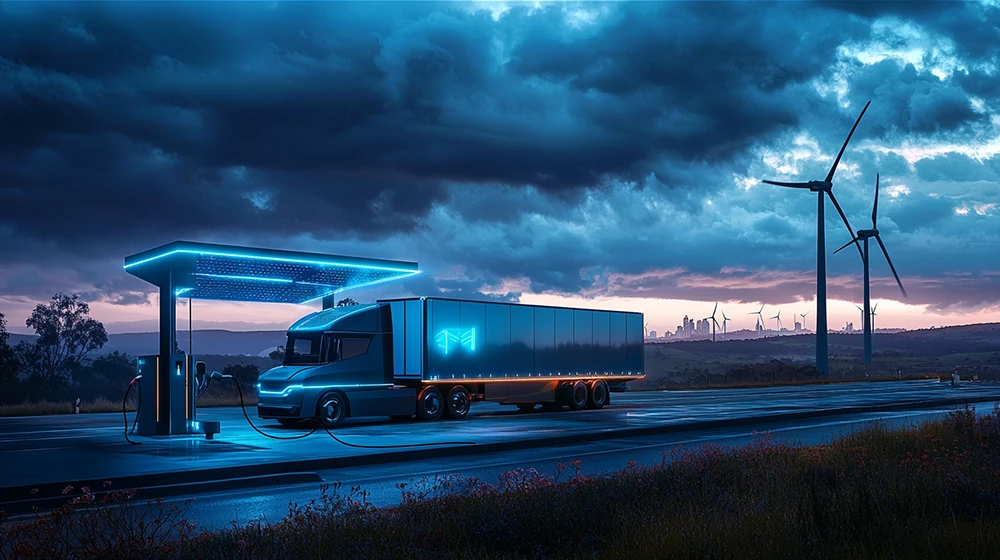
  • Potential to leverage Australia’s abundant renewable energy resources for green hydrogen production

Challenges in Australia:

  • Almost non-existent hydrogen refuelling infrastructure
  • Higher vehicle cost compared to both diesel and battery electric
  • Currently limited vehicle availability in Australia
  • Green hydrogen production capacity is still in its infancy

Hyundai’s XCIENT Fuel Cell trucks are among the first being trialled in Australia, with a partnership announced with Coregas in NSW to deploy hydrogen-powered prime movers for short-haul operations.

Renewable Natural Gas and Biofuels

While technically not zero-emission at the tailpipe, biofuels and renewable natural gas can achieve net-zero or even negative lifecycle emissions if sourced correctly.

Advantages for Australia:

  • Can use modified conventional engines, reducing transition costs
  • Existing distribution infrastructure can be utilised
  • Potential for local production using Australia’s agricultural waste
  • Easier transition for fleet operators and drivers

Challenges in Australia:

  • Limited availability of sustainable feedstock
  • Competition for bioresources from other sectors
  • Still produce some local air pollutants
  • May be seen as a transitional rather than long-term solution

Several Australian companies, including Cleanaway, are exploring biomethane solutions produced from landfill gas and organic waste for their truck fleets.

The Verdict on Technologies

There is no “one-size-fits-all” solution for Australia’s diverse trucking operations. Most experts agree the future will include a mix of these technologies, with:

  • Battery electric dominating urban and regional delivery (under 300km daily range)
  • Hydrogen fuel cells capturing much of the long-haul market (especially routes over 500km)
  • Biofuels and renewable gases serving as transitional solutions and filling specific niches

According to research from CSIRO’s National Hydrogen Roadmap, we can expect this mixed technology approach to persist through at least 2040, with specific applications determining the most suitable zero-emission solution.

The How: Building Australia’s Green Trucking Infrastructure

The transition to zero-emission trucking depends heavily on infrastructure development. Here’s where Australia stands and what we need to build:

Electric Charging Infrastructure

Australia currently has over 3,000 public EV charging locations, but very few are designed for heavy vehicles. To support electric trucking, we need:

Depot Charging

Most electric trucks will charge overnight at depots. This requires:

  • Significant power upgrades to many logistics facilities
  • Smart charging systems to manage electricity demand
  • Potentially on-site renewable generation and storage

Public Fast-Charging Network

For routes beyond a single charge range:

  • Ultra-fast chargers (350kW+) along major freight corridors
  • Standardized charging interfaces compatible with multiple truck brands
  • Facilities designed for truck dimensions and weight

The Australian Government’s Future Fuels Fund is supporting the development of heavy vehicle charging infrastructure, but industry estimates suggest we’ll need 10-15 times the current investment to support widespread adoption.

Hydrogen Refuelling Network

Australia’s hydrogen refuelling infrastructure is in its earliest stages, with just a handful of demonstration stations operational.

A comprehensive network would require:

  • Production facilities (ideally using renewable energy)
  • Distribution systems (pipelines or trucking)
  • Refuelling stations along major freight routes

The Australian Hydrogen Council estimates we’ll need at least 100 hydrogen refuelling stations strategically placed across the country to support long-haul hydrogen trucking operations.

Electricity Grid Upgrades

Both electric trucks and green hydrogen production place new demands on our electricity grid:

  • Local distribution networks may need reinforcement to handle depot charging
  • Remote renewable generation will require new transmission infrastructure
  • Grid storage will be essential to balance variable renewable supply with charging demand

The Australian Energy Market Operator’s Integrated System Plan outlines the significant transmission investments needed, many of which will directly benefit zero-emission trucking infrastructure.

Government Incentives and Regulation: The Policy Landscape

Government policy will play a crucial role in accelerating Australia’s transition to zero-emission trucking. Here’s the current landscape:

Federal Initiatives

  • Future Fuels Fund: Providing $250 million to help businesses integrate new vehicle technologies
  • Australian Renewable Energy Agency (ARENA): Funding hydrogen and electric truck demonstration projects
  • Clean Energy Finance Corporation: Offering favourable financing for zero-emission vehicle fleets
  • Modern Manufacturing Initiative: Supporting domestic manufacturing of zero-emission vehicles and components

State Programs

  • NSW Electric Vehicle Strategy: Includes $171 million for heavy vehicle charging infrastructure
  • Victorian Zero Emissions Vehicle Roadmap: Offers $20 million for zero-emission freight initiatives
  • Queensland Hydrogen Industry Strategy: Focusing on hydrogen production and refuelling infrastructure
  • Western Australia Renewable Hydrogen Strategy: Leveraging WA’s renewable resources for hydrogen production

Regulatory Developments

  • Euro VI Emission Standards: Being phased in for new heavy vehicles, indirectly encouraging zero-emission alternatives
  • Carbon Credit Schemes: Potential inclusion of transport in expanded safeguard mechanism
  • Road User Charging Reform: Likely to replace fuel excise with distance-based charging as zero-emission adoption increases

Industry experts predict that Australia will follow Europe’s lead in setting firm end dates for the sale of new diesel trucks, possibly as early as 2035 for some vehicle categories.

The Timeline: Australia’s Zero-Emission Trucking Roadmap

When will Australia’s trucking fleet become zero-emission? The transition will be gradual, with different segments adopting at different rates:

Phase 1: 2023-2026 (Early Adoption)

  • Urban delivery vehicles transition first (particularly last-mile delivery)
  • Demonstration projects for regional and long-haul applications
  • Infrastructure development focused on depot charging and limited public facilities
  • 5-10% of new truck sales being zero-emission by 2026

Phase 2: 2026-2030 (Accelerated Growth)

  • Regional delivery routes increasingly served by zero-emission vehicles
  • Initial adoption in long-haul for specific corridors with infrastructure
  • Major fleet operators setting and implementing transition targets
  • 15-30% of new truck sales being zero-emission by 2030

Phase 3: 2030-2035 (Mainstream Adoption)

  • Zero-emission options available for virtually all applications
  • Comprehensive charging and hydrogen refuelling networks established
  • Economic advantage shifting decisively toward zero-emission technologies
  • 40-70% of new truck sales being zero-emission by 2035

Phase 4: 2035-2050 (Completion)

  • End of sales of new diesel trucks in most categories
  • Remaining diesel fleet gradually retired
  • Complete zero-emission freight network established
  • Close to 100% of new truck sales being zero-emission by 2040

This timeline aligns with projections from Transport for NSW’s Electric and Hybrid Vehicle Plan, though actual adoption rates will depend on technology development, infrastructure investment, and policy support.

Industry Pioneers: Australian Success Stories

Several Australian companies are already leading the way in zero-emission trucking:

Woolworths Group

Australia’s largest retailer has committed to transitioning its entire transport fleet to electric vehicles by 2030. They’ve already deployed several SEA Electric trucks for home deliveries and are installing charging infrastructure at distribution centres nationwide.

Linfox

This logistics giant is trialling both battery electric and hydrogen trucks. Their partnership with Volvo has put the FL Electric into operation in Melbourne, while they’re also participating in hydrogen truck trials in Queensland. Linfox has committed to a 50% reduction in emissions by 2030.

Australia Post

With the nation’s largest delivery fleet, Australia Post has become an early adopter of electric delivery vehicles. They currently operate over 3,000 electric vehicles (mostly smaller delivery vehicles), but are expanding into medium-duty electric trucks for regional parcel delivery.

Toll Group

Toll is investing in biofuel solutions while simultaneously trialling battery electric trucks for urban operations. Their sustainability strategy includes a 25% emissions reduction by 2030 and exploring vehicle-to-grid technology at their facilities.

Practical Steps: How Your Fleet Can Prepare

If you’re operating a trucking fleet in Australia, here are practical steps to prepare for the zero-emission future:

1. Assess Your Operations

Begin by analyzing your routes, loads, and operational patterns:

  • Which routes have predictable, shorter daily distances suitable for electric?
  • Where do vehicles return to base daily, enabling overnight charging?
  • Which applications have weight-sensitive loads that might be challenging with heavy batteries?

2. Start Small and Learn

Consider implementing pilot projects:

  • Replace 1-2 vehicles in urban operations with electric alternatives
  • Partner with vehicle suppliers offering trial programs
  • Document performance, challenges, and driver feedback

3. Develop Charging/Refuelling Strategy

For depot-based operations:

  • Engage with your electricity provider early to understand grid constraints
  • Consider solar and battery installation to offset charging costs
  • Investigate smart charging systems to minimize demand charges

4. Driver and Technician Training

Zero-emission trucks require new skills:

  • Drivers need training in regenerative braking and range optimization
  • Technicians need high-voltage safety training for electric vehicles
  • Hydrogen requires specific safety protocols and training

5. Explore Funding Options

Take advantage of available support:

  • Apply for government grants for vehicles and infrastructure
  • Investigate green financing options from banks with sustainability commitments
  • Consider operating leases that mitigate technology risk

6. Plan Infrastructure Upgrades

Future-proof your facilities:

  • Include conduit and electrical capacity for charging in any new construction
  • Reserve space for future hydrogen storage if appropriate
  • Design flexible facilities that can accommodate evolving technologies

The Economics: When Does Zero-Emission Trucking Make Financial Sense?

While environmental benefits are clear, the business case for zero-emission trucking in Australia is becoming increasingly compelling:

Total Cost of Ownership Analysis

According to research from the Australian Trucking Association, the total cost of ownership crossover points (where zero-emission becomes cheaper than diesel) are estimated as:

  • Urban Delivery: Already approaching parity in 2023 for specific applications
  • Regional Distribution: Expected parity around 2025-2027
  • Long-Haul: Reaching parity around 2027-2030 for battery electric, 2028-2032 for hydrogen

These estimates account for:

  • Higher upfront vehicle costs (currently 2-3x diesel equivalents)
  • Lower operational costs (energy and maintenance)
  • Reduced downtime and longer vehicle life
  • Current incentives and grants

Key Economic Drivers

Factors accelerating the economic case include:

  • Battery Cost Reduction: Expected to continue falling 5-8% annually
  • Electricity Costs: Especially favourable for fleets with on-site solar
  • Diesel Prices: Rising fuel costs improve comparative economics
  • Maintenance Savings: 40-60% lower maintenance costs for electric powertrains
  • Carbon Pricing: Direct or indirect costs of emissions increasingly factored into business decisions

Challenges and Solutions: Overcoming Barriers to Adoption

Despite the promising outlook, significant challenges remain for Australia’s zero-emission trucking transition:

Range Anxiety and Route Planning

Challenge: Limited range of current zero-emission trucks compared to diesel.

Solutions:

  • Advanced route planning software optimizing for energy usage
  • Strategic placement of opportunity charging/refuelling locations
  • Battery swapping concepts being trialled for specific applications
  • Hybrid solutions for transitional period (e.g., range-extended electric)

Upfront Costs

Challenge: Significantly higher purchase price of zero-emission trucks.

Solutions:

  • Government incentives reducing initial purchase gap
  • Innovative financing models (pay-as-you-save, battery leasing)
  • Recognition of higher residual values in financing calculations
  • Consideration of total cost of ownership rather than purchase price

Infrastructure Availability

Challenge: Limited charging and hydrogen refuelling infrastructure.

Solutions:

  • Industry collaboration on shared infrastructure
  • Public-private partnerships for network development
  • Modular, scalable designs allowing gradual expansion
  • Interim solutions like mobile charging and refuelling

Grid Capacity

Challenge: Local electricity networks may be constrained.

Solutions:

  • On-site renewable generation and battery storage
  • Smart charging managing demand peaks
  • Vehicle-to-grid services providing revenue opportunities
  • Coordination with distribution network upgrades

The Future: Beyond Zero-Emission Propulsion

Looking beyond just changing the powertrain, the zero-emission transition will likely coincide with other transformative technologies:

Automation and Zero-Emission Synergies

Autonomous driving technology complements zero-emission powertrains:

  • Optimized driving patterns maximizing range
  • Coordinated charging/refuelling minimizing infrastructure requirements
  • Predictable operations well-suited to current range limitations

Digitalization and Efficiency

Digital technologies enhancing zero-emission operations:

  • AI-powered route optimization reducing energy consumption
  • Predictive maintenance preventing energy-wasting component failures
  • Digital freight matching reducing empty running
  • Blockchain verifying green credentials for customers

Advanced Materials and Design

Purpose-built zero-emission trucks will evolve to:

  • Lightweight materials offsetting battery weight
  • Aerodynamic designs specifically optimizing for electric range
  • Modular approaches separating powertrain from cargo sections

Conclusion: Australia’s Green Logistics Future

Australia’s pathway to zero-emission trucking presents both significant challenges and extraordinary opportunities. Our unique geography, climate, and infrastructure create hurdles not faced in other markets, but they also drive innovation and adaptation.

The transition won’t happen overnight – diesel trucks will remain part of Australia’s logistics landscape for years to come – but the direction is clear. Forward-thinking fleet operators are already planning their zero-emission journey, even if they’re taking measured first steps.

What’s particularly exciting is that this transition aligns environmental benefits with long-term economic advantages. While early adoption requires investment and adaptation, the operational savings, brand benefits, and competitive advantages will ultimately reward those who embrace this change.

For Australia’s trucking industry, going green isn’t just about meeting climate commitments – it’s about maintaining competitiveness in a rapidly evolving global market. As international supply chains increasingly demand carbon accountability, Australian operators with zero-emission credentials will have a decisive advantage.

The road to zero-emission trucking may be challenging, but Australia’s logistics industry has never shied away from challenges. From navigating vast distances to embracing technological change, adaptation is in our industry’s DNA.

At Embrace the Future, we’re committed to helping Australia’s trucking and logistics operators navigate this exciting transition. Whether you’re taking your first steps toward sustainability or advancing an established green logistics program, we’re here to provide the insights, connections, and practical guidance you need.

The future of Australian trucking isn’t just zero-emission – it’s more efficient, more innovative, and ultimately more profitable. The journey has begun, and we’re excited to be along for the ride.

Additional Resources

For more information on zero-emission trucking in Australia, check out these authoritative resources:

The Autonomous Revolution: How Self-Driving Trucks Will Transform Australian Logistics

If you’ve been keeping an eye on the industry headlines lately, you’ve probably noticed that autonomous vehicles aren’t just science fiction anymore. They’re becoming a reality, and they’re set to revolutionise the way we think about trucking and logistics here in Australia.

Today, we’re taking a deep dive into the world of self-driving trucks, exploring what this technology means for our vast continent, our unique challenges, and most importantly, what it means for the blokes and sheilas who make our logistics industry tick.

Where We Stand: The Current State of Autonomous Trucking in Australia

Let’s face it – Australia presents some unique challenges for autonomous vehicles. We’ve got everything from bustling urban centres to remote outback roads that stretch further than the eye can see. It’s a far cry from the neat, well-marked highways of Europe or the USA where most of this technology is being developed.

Currently, Australia is still in the early stages of autonomous truck adoption. While fully autonomous vehicles aren’t yet a common sight on our roads, several significant trials are already underway. Mining giants like Rio Tinto and BHP have been using autonomous haulage systems at their remote sites in Western Australia for years, proving that the technology can work in our harsh conditions.

But what about public roads? In 2019, the National Transport Commission (NTC) released its Automated Vehicle Program, which outlines regulatory reforms to support the safe commercial deployment of automated vehicles in Australia. This framework is essential for moving beyond closed-site operations to actual on-road implementation.

The Timeline: When Will We See Self-Driving Trucks on Australian Roads?

If you’re wondering when you’ll be sharing the highway with a truck that has no one behind the wheel, the answer isn’t straightforward. Most experts in the field suggest we’re looking at a gradual rollout that will occur in phases:

Phase 1: Driver Assistance (Present-2026)

We’re already here. Many new trucks come equipped with advanced driver assistance systems (ADAS) like adaptive cruise control, lane-keeping assistance, and automatic emergency braking. These technologies don’t replace the driver but make their job safer and easier.

Phase 2: Limited Autonomy (2026-2030)

This is where things get interesting. We’ll likely see the first truly autonomous trucks operating in limited conditions – perhaps on specific highway routes between major cities like Sydney and Melbourne, or on designated freight corridors. Human drivers will still be required for the “first and last mile” – getting on and off the highway and navigating urban areas.

Phase 3: High Autonomy (2030-2035)

As the technology matures and our regulatory framework catches up, we’ll start seeing trucks that can handle most situations without human intervention. This might include the ability to navigate moderately complex environments, though probably not the most challenging outback routes.

Phase 4: Full Autonomy (2035 and beyond)

Eventually, we’ll reach a point where trucks can operate without human drivers in virtually all conditions. This is when the truly revolutionary changes to our logistics networks will happen.

Of course, these timelines aren’t set in stone. Technological breakthroughs, regulatory decisions, and public acceptance will all play crucial roles in determining how quickly autonomous trucks become mainstream.

The Infrastructure Challenge: What Australia Needs to Implement Self-Driving Trucks

One of the biggest hurdles to widespread adoption of autonomous trucks in Australia isn’t necessarily the vehicle technology itself, but the infrastructure needed to support it.

Road Quality and Markings

Autonomous vehicles rely heavily on clear road markings and signs to navigate. Anyone who’s driven through regional Australia knows that not all our roads meet this standard. Significant investment in upgrading and maintaining road infrastructure will be necessary.

Digital Infrastructure

Self-driving trucks don’t just read the road – they need high-quality, real-time data. This means:

  • High-speed, reliable mobile connectivity along transport routes
  • Accurate, up-to-date digital mapping
  • Roadside units that can communicate with vehicles (V2I or Vehicle-to-Infrastructure technology)

The Australian Government’s National Freight and Supply Chain Strategy acknowledges the need for this digital infrastructure, but implementing it across our vast continent will be no small task.

Charging and Maintenance Facilities

Many autonomous truck initiatives are paired with electrification efforts. This means we’ll need a network of charging stations and specialised maintenance facilities capable of servicing these high-tech vehicles.

Regulatory Roadmap: Navigating the Legal Landscape

Before autonomous trucks can become commonplace, we need clear rules of the road. Australia is actually making solid progress in this area, with the National Transport Commission leading the charge.

Key regulatory considerations include:

Safety Standards

What safety benchmarks must autonomous vehicles meet before they’re allowed on public roads? The development of Australian Design Rules (ADRs) specific to autonomous vehicles is ongoing.

Liability Framework

If an autonomous truck is involved in an accident, who’s responsible? The vehicle manufacturer? The software developer? The fleet operator? Clarifying these questions is essential for insurance and legal purposes.

Licensing and Certification

What qualifications will be needed to operate or supervise autonomous vehicles? This will likely require new categories of licences and certifications.

Australia is taking a national approach to these regulatory challenges through the National Transport Commission’s Automated Vehicle Program, which aims to ensure consistent rules across state boundaries – essential for long-haul freight operations.

The Human Element: Jobs, Skills, and Social Impact

Perhaps the most discussed aspect of autonomous trucking is its impact on employment. Australia currently has around 200,000 truck drivers, and it’s natural to worry about their future.

However, the reality is more nuanced than simply “robots taking jobs.” Here’s why:

Evolution Rather Than Extinction

For the foreseeable future, we’re likely to see a model where humans and automation work together. Think of pilots in modern aircraft – they supervise highly automated systems rather than manually flying at all times. Similarly, truck “operators” will likely supervise autonomous systems and take over in complex situations.

New Roles Emerging

As traditional driving roles evolve, new positions will emerge:

  • Remote operators monitoring multiple autonomous vehicles
  • Specialists in autonomous vehicle maintenance and troubleshooting
  • Fleet optimisation experts who maximise the efficiency of mixed autonomous/conventional fleets
  • Last-mile delivery specialists for urban environments

Skills Transition

This evolution means our industry needs to focus on retraining and upskilling. The Transport and Logistics Industry Reference Committee is already working on updating training packages to reflect these changing skill requirements.

Driver Shortage Context

It’s also worth noting that Australia, like many countries, faces a chronic shortage of truck drivers. The average age of Australian truck drivers is over 45, and the industry struggles to attract younger workers. Automation may help address this shortage rather than primarily displacing existing workers.

Real-World Applications: Where We’ll See Autonomous Trucks First

Not all segments of the trucking industry will adopt autonomous technology at the same pace. Here are the areas likely to lead the way:

Highway Freight

Long, predictable highway routes between major cities are the low-hanging fruit for autonomous trucking. Companies like Toll and Linfox could implement “hub-to-hub” models where autonomous trucks handle the highway portion while human drivers manage the more complex urban segments.

Mining and Resources

As mentioned earlier, this sector is already leading the way. Autonomous haulage in controlled environments like mine sites will continue to expand and provide valuable learnings for on-road applications.

Port and Terminal Operations

The contained environments of ports and intermodal terminals make them ideal for early adoption. Autonomous vehicles moving containers within these facilities could significantly improve efficiency.

Platooning

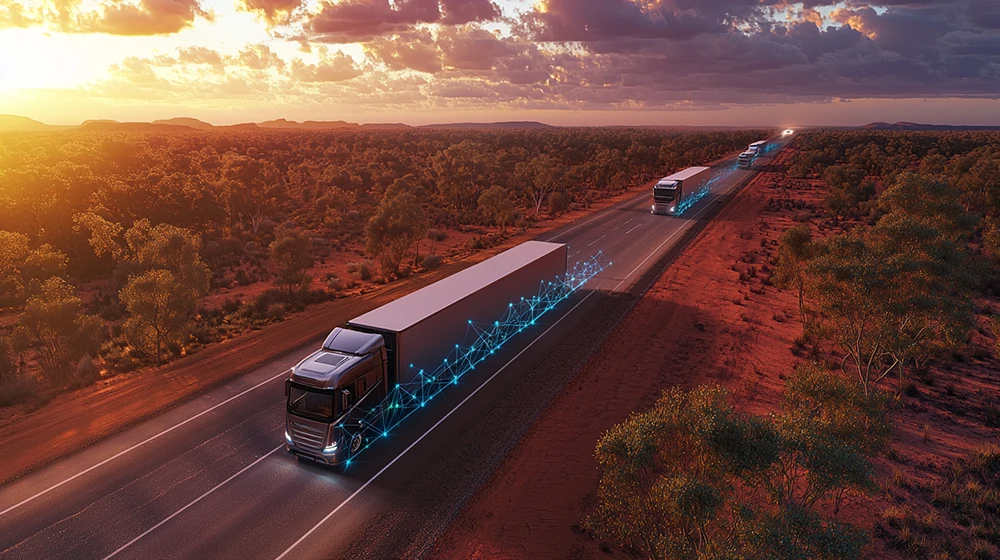
Truck platooning – where a lead truck (possibly with a human driver) is followed closely by autonomous trucks – offers significant fuel efficiency and safety benefits. Australia’s long, straight highways are perfect for this application.

The Environmental Angle: Greener Logistics Through Autonomy

Autonomous trucks aren’t just about efficiency – they could help Australia meet its climate commitments too.

Optimised Driving Patterns

Autonomous systems drive more consistently than humans, avoiding unnecessary acceleration and braking. This driving style can reduce fuel consumption by 10-15%, according to research from the University of Melbourne’s Australian Integrated Multimodal EcoSystem (AIMES).

Electrification Synergy

Many industry experts believe autonomous trucking and electric powertrains will develop in tandem. Autonomous systems can optimise battery usage and charging schedules, helping overcome some of the range challenges electric trucks face on Australia’s vast road network.

Reduced Congestion

Smart routing and traffic management for autonomous fleets can reduce congestion in urban areas, further cutting emissions.

Case Studies: Success Stories From Around the Globe

While Australia is still in the early stages of on-road autonomous trucking, we can learn from international examples:

TuSimple (USA)

TuSimple has been conducting regular autonomous freight runs in the southwestern United States. In 2021, they completed the first fully autonomous, driver-free truck run on public roads – a 130-kilometer journey in Arizona. Their approach focuses on specially mapped routes and uses a sophisticated combination of cameras, radar, and lidar for perception.

Einride (Sweden)

Einride takes a different approach with their “Pods” – purpose-built electric autonomous vehicles without a driver’s cab. These vehicles operate in commercial service at specific sites in Sweden and are monitored remotely. This model could work well for certain applications in Australia, particularly in ports and logistics hubs.

WABCO and Baidu (China)

This partnership is developing autonomous driving technology specifically for challenging conditions in China. Their experiences handling diverse road conditions could provide valuable insights for Australia’s varied terrain.

The Technology Under the Hood: How Autonomous Trucks Actually Work

To understand the future of trucking, it helps to know the basics of how these autonomous systems function.

Sensing the World

Autonomous trucks use a combination of:

  • Cameras for visual information
  • Radar for detecting objects and their speed
  • Lidar for precise 3D mapping
  • Ultrasonic sensors for close-range detection
  • GPS for positioning

These systems must be ruggedised for Australian conditions, where dust, extreme heat, and wildlife present unique challenges.

Processing and Decision-Making

The real magic happens in the artificial intelligence systems that interpret all this sensor data and make driving decisions. These systems use deep learning algorithms that improve over time as they encounter more situations. Companies like Advanced Navigation, based in Sydney, are at the forefront of developing AI navigation systems suited to Australian conditions.

Connectivity

Vehicle-to-vehicle (V2V) and vehicle-to-infrastructure (V2I) communication allows autonomous trucks to share information and coordinate their actions. This becomes particularly important in complex scenarios like merging onto highways or navigating roadworks.

Challenges Unique to Australia

Our country presents some specific hurdles for autonomous vehicle deployment:

Vast Distances

The sheer size of Australia means that autonomous systems need exceptional reliability. A breakdown in remote areas could be more problematic than in countries with denser populations and service networks.

Wildlife

Kangaroos, wombats, and other native animals present unique perception challenges for autonomous vehicles. Their unpredictable movement patterns have actually proven difficult for some autonomous systems to interpret correctly.

Extreme Weather

From dust storms to tropical downpours, Australia’s extreme weather can obscure sensors and create challenging driving conditions that autonomous systems must be able to handle.

Rural Connectivity

The limited mobile coverage in rural and remote areas potentially restricts the operation of connected autonomous vehicles in these regions – at least until our telecommunications infrastructure improves.

Getting Started: How Australian Trucking Companies Can Prepare

If you’re in the logistics business, you might be wondering how to prepare for this autonomous future. Here are some practical steps:

Begin with Driver Assistance

Start by adopting trucks with advanced driver assistance systems (ADAS). This gives your drivers experience with automation while improving safety and efficiency today.

Invest in Fleet Management Software

Modern fleet management platforms will be essential for integrating autonomous vehicles in the future. Getting comfortable with data-driven fleet optimisation now will ease the transition later.

Engage with Trials and Pilots

Look for opportunities to participate in autonomous vehicle trials. Transport for NSW and other state authorities occasionally seek industry partners for these initiatives.

Workforce Planning

Start conversations with your team about how roles might evolve. Investing in upskilling programs demonstrates a commitment to your workforce’s future.

The Road Ahead: Key Developments to Watch

As we wrap up this deep dive into autonomous trucking, here are the key signposts to watch for in the coming years:

Regulatory Progress

Keep an eye on the NTC’s regulatory framework development. When commercial deployment regulations are finalised, we’ll likely see a rapid acceleration in adoption.

Major Fleet Announcements

When large Australian logistics companies like Toll, Linfox, or Australia Post announce significant autonomous vehicle orders, it will signal that the technology has reached commercial viability.

Infrastructure Investment

Government announcements about smart road infrastructure investment will be a clear indicator that widespread autonomous vehicle deployment is approaching.

Insurance Frameworks

The development of specialised insurance products for autonomous vehicles will be another key enabler for commercial adoption.

Conclusion: Embracing the Autonomous Future

The shift to autonomous trucking represents perhaps the most significant transformation in road freight since the introduction of the semi-trailer. While the timeline may be gradual, the direction is clear – autonomous trucks will become an increasingly common sight on Australian roads in the coming decades.

For fleet operators, drivers, and the broader logistics industry, this evolution offers both challenges and opportunities. Those who start preparing now – by understanding the technology, upskilling their workforce, and gradually incorporating automation – will be best positioned to thrive in this new era.

Australia’s unique geography and climate present specific challenges for autonomous vehicle deployment, but they also offer compelling use cases where the technology can deliver significant benefits. From reducing driver fatigue on long-haul routes to addressing the chronic driver shortage, autonomous trucks have the potential to make our logistics networks safer, more efficient, and more sustainable.

The autonomous revolution is coming to Australian trucking – and at Embrace the Future, we’ll be covering every development as it unfolds. Stay tuned for more insights, and don’t hesitate to reach out if you’re looking to navigate this exciting transition in your own logistics operations.

Additional Resources

For those wanting to dive deeper into autonomous vehicles in Australia, check out these authoritative sources:

The Future Is Here: How Truck Platooning Will Revolutionize Australian Logistics

In the rapidly evolving landscape of transportation technology, Australia stands at the precipice of a logistics revolution. While much media attention focuses on self-driving passenger vehicles, a more immediate and potentially transformative development is emerging for our freight industry: truck platooning. This technology, which allows multiple trucks to travel in closely coordinated convoys with minimal human intervention, represents not just an incremental improvement but a fundamental reimagining of how goods move across our vast continent.

Australia’s Freight Challenge: A Growing Crisis

Australia’s freight task is enormous and growing at a staggering pace. According to the National Transport Commission, Australia currently moves approximately 5 million tonnes of freight daily, with road transport handling 70% of this massive volume. This dependency on road freight shows no signs of abating – projections from Infrastructure Australia indicate that road freight volumes will double by 2040, creating unprecedented pressure on our existing infrastructure and logistics capabilities.

Simultaneously, the Bureau of Infrastructure Transport and Regional Economics paints a sobering picture of our transport future, forecasting that without significant innovation, traffic congestion could cost the Australian economy a staggering $30 billion annually by 2030. This perfect storm of increasing freight demands and capacity constraints demands bold solutions.

Understanding Truck Platooning: Beyond Just Driverless Vehicles

Truck platooning represents a sophisticated blend of autonomous vehicle technology, advanced communication systems, and coordinated logistics. Unlike fully autonomous vehicles that operate independently, platooning creates a digitally tethered convoy where multiple trucks travel in close formation, typically with a human driver in the lead truck and semi-autonomous or fully autonomous systems controlling the following vehicles.

How Platooning Works

At its core, platooning relies on vehicle-to-vehicle (V2V) communication that enables trucks to synchronize their movements with millisecond precision. This system includes:

  1. Advanced Driver Assistance Systems (ADAS): Adaptive cruise control, lane-keeping assistance, and automated braking work in concert to maintain precise positioning.
  2. Dedicated Short-Range Communications (DSRC): Ultra-fast communication links between vehicles enable real-time coordination of acceleration, braking, and steering.
  3. Sensor Fusion: A combination of radar, lidar, cameras, and GPS creates a comprehensive environmental awareness that exceeds human perception capabilities.
  4. Central Control Systems: Sophisticated algorithms manage the entire platoon, optimizing spacing based on vehicle weight, road conditions, and traffic patterns.

This technological symphony allows trucks to safely maintain following distances as close as 15-20 meters at highway speeds – far closer than would be possible with human drivers alone.

Australia’s Platooning Progress: From Concept to Reality

While South Australia pioneered autonomous vehicle trials on Australian roads back in 2015, Victoria has emerged as a leader in freight-specific applications. The Victorian government, in partnership with Transport for Victoria and VicRoads, has announced plans for extensive platooning trials on key freight corridors. These trials will test both the technological viability and the infrastructure requirements for widespread deployment.

Other states are following suit. The Queensland Department of Transport and Main Roads has incorporated platooning into its Cooperative and Automated Vehicle Initiative (CAVI), while New South Wales’ Future Transport 2056 strategy explicitly identifies platooning as a key technology for freight efficiency.

Major Australian logistics companies haven’t been idle either. Toll Group and Linfox have both initiated partnerships with technology providers to explore platooning capabilities. Toll’s collaboration with Daimler Trucks has already seen limited testing of connected truck technology on closed courses, with plans to expand to controlled public road trials.

The Transformative Benefits of Platooning

The potential benefits of widespread truck platooning in Australia extend far beyond simple operational improvements, touching on economic, environmental, and safety considerations.

Economic Advantages

  1. Dramatic Efficiency Gains: Platooning could revolutionize interstate freight movement. Currently, a single B-double truck can transport approximately 30 tonnes of freight. Platoons of five or more connected trucks could move upwards of 150-200 tonnes in a single coordinated convoy, dramatically increasing freight capacity without proportionally increasing driver requirements.
  2. Reduced Labor Costs: With only the lead truck requiring a fully engaged driver, platooning addresses one of the industry’s most pressing challenges – the nationwide shortage of qualified heavy vehicle operators. The Australian Trucking Association estimates the industry faces a shortfall of nearly 40,000 drivers by 2030.
  3. Fuel Efficiency: The aerodynamic benefits of platooning are substantial. Research by the CSIRO suggests that following trucks in a platoon can achieve fuel savings of 10-15% due to reduced air resistance. For an industry where fuel represents approximately 30% of operating costs, these savings translate to millions of dollars annually.
  4. Increased Asset Utilization: Platooning technology could eventually enable longer operating hours, as follower trucks may be able to operate with drivers in rest periods while still maintaining safety and compliance with work hours regulations.

Environmental Benefits

  1. Reduced Emissions: The fuel efficiency gains directly translate to lower carbon emissions. The Department of Infrastructure, Transport, Regional Development and Communications estimates that optimized platooning could reduce CO₂ emissions from the heavy vehicle sector by up to 7 million tonnes annually by 2040.
  2. Reduced Congestion: By increasing the freight capacity per lane while maintaining or improving traffic flow, platooning reduces the total number of trucks needed on the road, helping alleviate congestion on critical freight corridors.
  3. Infrastructure Wear: More efficient movement of freight means less overall stress on road infrastructure, potentially extending the life of critical transportation assets.

Safety Improvements

  1. Elimination of Human Error: With approximately 80% of heavy vehicle accidents involving some form of human error, the automation aspects of platooning could significantly reduce accident rates. The reaction time of connected systems is measured in milliseconds, compared to the 1-2 seconds typical for human drivers.
  2. Consistent Behavior: Automated systems don’t experience fatigue, distraction, or impairment – factors that contribute to a significant percentage of heavy vehicle incidents.
  3. Advanced Collision Avoidance: The sensor systems used in platooning vehicles can detect hazards beyond human visual range, allowing for proactive rather than reactive safety management.

The Road Ahead: Challenges and Considerations

Despite its promising benefits, the path to widespread platooning adoption in Australia faces several significant hurdles that require thoughtful consideration and coordinated action.

Infrastructure Requirements

Australia’s road infrastructure will require substantial upgrades to fully support platooning technology. These include:

  1. Digital Infrastructure: Reliable, high-speed communication networks along major freight routes are essential for the V2V and vehicle-to-infrastructure (V2I) communications that platooning requires. Current coverage gaps in regional and remote areas present significant challenges.
  2. Smart Roads: Embedding sensors, communication beacons, and advanced traffic management systems into key freight corridors will enhance platooning safety and efficiency. However, the cost of these upgrades across Australia’s vast road network could run into billions of dollars.
  3. Specialized Lanes and Facilities: Dedicated platooning lanes on major highways and specialized staging areas where platoons can form and dissolve may become necessary to maximize benefits while minimizing disruption to other road users.
  4. Funding Mechanisms: The question of how to fund these infrastructure improvements remains contentious. Options include public-private partnerships, user charges specifically for platooning operations, or broader road user charging reforms.

Safety Concerns

While platooning promises safety improvements, it also introduces new risk scenarios that must be addressed:

  1. Catastrophic Failure Modes: A communication failure or sensor malfunction in a platoon traveling at highway speeds could potentially lead to multi-vehicle incidents of greater severity than typical single-vehicle accidents. Redundant safety systems and fail-safe protocols are essential.
  2. Interaction with Conventional Vehicles: Platoons will share roads with human-driven vehicles for the foreseeable future. The interaction between these different vehicle types, particularly around highway entrances and exits, presents complex safety challenges.
  3. Cyber Security: Connected vehicle systems are potentially vulnerable to hacking or other cyber attacks. Robust security protocols must be implemented to prevent malicious interference with platooning operations.
  4. Weather and Environmental Conditions: Australia’s diverse and often extreme weather conditions present challenges for sensor systems. Dust storms, heavy rain, and bushfire smoke can all impair the visibility sensors that platooning relies on.

Regulatory Framework

The existing regulatory environment was not designed with platooning in mind, creating several areas that require reform:

  1. Vehicle Standards: Current Australian Design Rules (ADRs) do not specifically address platooning technology. Updates are needed to ensure safety while enabling innovation.
  2. Driver Licensing and Certification: What qualifications will be required for operators of lead trucks versus following trucks? New licensing categories may be necessary.
  3. Work Hours and Rest Periods: Existing rules around driver work hours and mandatory rest periods will need reconsideration in light of the reduced active driving requirements in follower vehicles.
  4. Liability and Insurance: When accidents occur involving platoons, questions of liability become complex. Is the lead driver responsible? The technology provider? The fleet operator? Clear frameworks are needed.
  5. Cross-Border Consistency: For interstate platooning to function effectively, consistent regulations across state and territory borders are essential. The National Transport Commission is working toward this goal but significant harmonization challenges remain.

Technology Reliability

For platooning to gain widespread acceptance, the underlying technology must be exceptionally reliable:

  1. Communication Redundancy: Multiple backup systems for the critical vehicle-to-vehicle communications must be in place to ensure safety in case of primary system failure.
  2. Sensor Robustness: Sensors must function reliably in all Australian conditions, from the dust of the Nullarbor to the tropical downpours of Far North Queensland.
  3. Software Validation: The complex algorithms controlling platoon behavior require extensive testing and validation to ensure they respond appropriately in all potential scenarios.

The Timeline: When Will Platooning Become Mainstream?

Based on current development trajectories and planned trials, we can project a rough timeline for platooning adoption in Australia:

2023-2025: Controlled Trials and Regulatory Development

  • Limited platooning trials on specific corridors under controlled conditions
  • Development of initial regulatory frameworks and standards
  • Testing of infrastructure requirements and communication systems

2025-2028: Limited Commercial Deployment

  • First commercial platooning operations on major highways
  • Initially limited to two-truck platoons with drivers in both vehicles
  • Deployment of initial smart infrastructure on key freight routes

2028-2032: Expanded Operations

  • Three to five truck platoons becoming common on major interstate routes
  • Follower trucks operating with reduced driver engagement
  • Dedicated platooning lanes on busiest freight corridors

2032-2035: Mainstream Integration

  • Platooning becoming standard practice for long-haul freight
  • Integration with broader autonomous vehicle systems
  • Comprehensive smart road infrastructure on all major highways

Beyond 2035: Full Autonomy

  • Potential evolution from platooning to fully autonomous truck convoys
  • Integration with automated loading/unloading systems
  • Comprehensive redesign of freight logistics networks around autonomous capabilities

What This Means for Australian Businesses

The coming platooning revolution has significant implications for businesses throughout the Australian supply chain:

For Fleet Operators

  • Begin incorporating platooning compatibility into fleet renewal plans
  • Invest in driver training programs for platoon operation
  • Engage with trials and pilot programs to gain early experience

For Freight Forwarders and Logistics Companies

  • Plan for changing cost structures as platooning alters the economics of road freight
  • Develop strategies to leverage increased capacity and potential speed improvements
  • Consider how platooning might change optimal warehouse and distribution center locations

For Infrastructure Providers

  • Identify opportunities for smart infrastructure development
  • Prepare for changing patterns of rest area and refueling facility usage
  • Consider the implications of platoons for road design and traffic flow

For Technology Providers

  • Significant market opportunities exist in communications, control systems, and specialized hardware
  • Australian-specific solutions needed for unique conditions and regulatory environment
  • Partnership opportunities with established transport operators for real-world testing

Conclusion: Embracing the Platooning Future

Truck platooning represents a pivotal transition for Australian logistics – a step change that bridges today’s human-driven transport with tomorrow’s fully autonomous future. While the challenges are substantial, the potential benefits for efficiency, safety, and environmental impact make it an innovation worth pursuing aggressively.

Rather than fearing the disruption, Australian transport operators and logistics companies should be actively engaging with the development of this technology. Those who participate in early trials, contribute to regulatory discussions, and begin planning for platooning integration will be best positioned to capture the competitive advantages it offers.

The question isn’t whether platooning will transform Australian road freight – it’s how quickly the transformation will occur and who will lead it. As trials expand and technology matures, the window for early adopter advantages narrows. For forward-thinking companies in the logistics sector, the time to engage with platooning is now.

Our vast distances, concentrated population centers, and heavy reliance on road freight make Australia an ideal candidate for platooning technology. With thoughtful implementation, robust safety standards, and appropriate infrastructure investment, truck platooning has the potential to revolutionize how goods move across our continent, delivering economic and environmental benefits for decades to come.

Additional Resources

For those interested in learning more about truck platooning in Australia, these authoritative sources provide valuable insights:

Driving Forward: Transformative Technologies Reshaping the Transport Industry Over the Last Decade

The transport and logistics sector has undergone a remarkable transformation over the past decade, evolving at a pace that would have been difficult to imagine just ten years ago. From intelligent navigation systems and electric powertrains to autonomous technologies and digital freight platforms, innovations have fundamentally altered how goods and people move across Australia and around the world.

As we look toward the future of transportation, it’s worth reflecting on the key technological advancements that have reshaped the industry. These innovations haven’t merely improved existing systems—they’ve completely reimagined what’s possible in transport efficiency, sustainability, and service.

Smart Navigation and Route Optimization

A decade ago, GPS navigation was already common in the transport industry, but the systems were relatively basic by today’s standards. Drivers relied on dedicated GPS devices that provided simple turn-by-turn directions with limited real-time traffic data.

From Basic Mapping to Intelligent Navigation

Modern navigation systems have evolved far beyond their predecessors, incorporating:

  • Real-time traffic analysis that uses data from millions of vehicles to predict congestion
  • Dynamic rerouting that automatically adjusts to changing road conditions
  • Weather impact modeling that anticipates how environmental factors will affect journey times
  • Vehicle-specific routing that accounts for height, weight, and cargo restrictions
  • Fuel-optimized path planning that minimizes consumption based on topography and traffic flow

For transport companies, these advancements have translated into measurable benefits. Studies show that advanced route optimization can reduce fuel consumption by 15-20% and increase delivery capacity by up to 25% without adding vehicles to the fleet.

Australian logistics company Toll Group reported that implementing AI-powered route optimization across their fleet resulted in a 12% reduction in kilometers traveled while maintaining the same delivery volume—a significant achievement in both cost reduction and environmental impact.

Electrification of Transport

The past decade has witnessed the beginning of a fundamental shift in how vehicles are powered, with electric vehicles (EVs) moving from experimental curiosities to mainstream transport options.

Commercial Electric Vehicles Come of Age

In 2013, electric trucks were largely confined to concept vehicles and small pilot programs. Today, manufacturers from Volvo and Daimler to Tesla and emerging players like SEA Electric in Australia offer commercial electric vehicles across various weight classes and applications.

This transformation is particularly evident in several areas:

  • Last-mile delivery: Major courier companies including Australia Post have deployed electric delivery vans for urban operations, with Australia Post now operating over 3,000 electric delivery vehicles
  • Public transport: Cities like Sydney and Melbourne have committed to transitioning their bus fleets to electric, with hundreds of electric buses already in service
  • Medium-duty trucks: Companies like Woolworths and Coles have begun introducing electric trucks for regional distribution
  • Heavy transport: Pilot programs for electric long-haul trucks are underway on key routes like Melbourne to Sydney

The economics of electric transport have changed dramatically over this period. Battery costs have fallen by approximately 89% since 2010, according to BloombergNEF, while energy density has more than doubled. For fleet operators, this has reduced the total cost of ownership gap between electric and diesel vehicles, with some applications now reaching cost parity.

Autonomous and Driver Assistance Technologies

While fully autonomous vehicles operating without human supervision remain a goal for the future, the past decade has seen remarkable progress in advanced driver assistance systems (ADAS) and limited autonomy.

From Driver Support to Partial Automation

The evolution of autonomous capabilities in transport has followed a step-by-step progression:

  • 2013-2015: Basic driver support features like adaptive cruise control and lane departure warnings became standard in commercial vehicles
  • 2016-2019: More advanced systems including automatic emergency braking and lane-keeping assistance were widely deployed
  • 2020-2023: Partial automation featuring hands-free highway driving and automated yard operations emerged in commercial applications

Australian mining companies have been at the forefront of autonomous vehicle deployment, with Rio Tinto operating over 130 autonomous haul trucks across their Pilbara operations. These vehicles have moved more than 4 billion tonnes of material and demonstrated a 15% improvement in productivity compared to human-operated equipment.

On public roads, the progress has been more measured but still significant. Companies like Toll Group and Linfox have implemented driver assistance technologies across their fleets, contributing to a reported 60% reduction in certain types of accidents.

Platooning Pilot Programs

Truck platooning—where multiple trucks travel in close formation using connected technology—has moved from concept to reality during this period. This approach combines human driving with automation to improve fuel efficiency and safety.

Key platooning trials in Australia have included:

  • Transport for NSW’s Connected and Automated Vehicle Initiative testing platoons on the Hume Highway
  • A Cooperative Research Centre project evaluating platooning benefits for the Australian road network
  • Port of Brisbane trials examining the potential for platooning in port operations

Early results suggest fuel savings of 7-10% for following vehicles in a platoon, with corresponding reductions in emissions.

Digital Freight Platforms and Marketplaces

Perhaps the most disruptive change in transport over the past decade has been the digitization of freight booking and management. Traditional processes involving phone calls, emails, and paperwork have been rapidly replaced by digital platforms.

The Uberization of Freight

Digital freight platforms have transformed how shippers and carriers connect:

  • Load matching marketplaces like Freight Exchange and Loadshift have created more efficient markets for connecting available capacity with freight needs
  • Specialized service platforms such as Find A Mover have revolutionized how consumers and businesses connect with professional moving services, bringing transparency and efficiency to what was once a fragmented market
  • Real-time pricing models have replaced static rate cards, allowing for dynamic adjustment based on demand and capacity
  • Visibility platforms provide end-to-end tracking of shipments across multiple carriers and modes
  • Digital documentation has reduced paperwork and administrative costs while improving accuracy

The impact has been particularly significant for small to medium carriers, who can now access freight opportunities that were previously difficult to source. For shippers, these platforms have increased choice and typically reduced costs through more competitive bidding.

For consumers moving homes or offices, platforms like Find A Mover have transformed the experience from a stressful, time-consuming process of collecting quotes to a streamlined digital experience that matches requirements with qualified professionals in minutes.

Australian startup Ofload (formerly Loadsmile) reported connecting over 15,000 carriers with shippers since their 2020 launch, while reducing empty running by approximately 30% for participating vehicles—a win for both business efficiency and environmental sustainability.

Internet of Things (IoT) and Connected Vehicles

The proliferation of affordable sensors and connectivity has created the “connected vehicle”—a rolling data center that provides unprecedented visibility into vehicle performance, driver behavior, and cargo conditions.

From Periodic Inspections to Continuous Monitoring

A decade ago, fleet managers relied primarily on scheduled maintenance and driver reports to understand vehicle status. Today’s connected transport systems provide:

  • Real-time engine diagnostics that can predict failures before they occur
  • Driver behavior monitoring that identifies opportunities for coaching and improvement
  • Cargo condition tracking including temperature, humidity, and shock monitoring
  • Fuel efficiency analytics that identify wasteful practices or vehicle issues
  • Safety system monitoring that ensures critical systems are functioning properly

Major Australian fleets now generate terabytes of vehicle data annually, with sophisticated analytics systems translating this information into actionable insights. Companies report maintenance cost reductions of 15-30% through predictive approaches, while also experiencing fewer on-road breakdowns and extended vehicle lifespans.

Cold Chain Innovation

For temperature-controlled transport, IoT advances have been particularly valuable. Modern refrigerated transport now features:

  • Continuous temperature logging with cellular and satellite transmission
  • Automated alerts when conditions approach acceptable limits
  • Remote adjustment of refrigeration settings
  • Blockchain-verified temperature records for regulatory compliance

These capabilities have significantly reduced product loss in transit while ensuring food safety and pharmaceutical efficacy.

Mobile Workforce Solutions

The smartphone revolution has transformed how transport workers interact with information systems, creating new possibilities for productivity and service.

From Paper to Digital Workflows

Transport operations that once relied on paper manifests, delivery dockets, and timesheets have been revolutionized by mobile applications:

  • Electronic proof of delivery with signature capture, photos, and GPS verification
  • Dynamic dispatch that updates driver tasks in real-time based on conditions
  • Turn-by-turn navigation optimized for specific vehicle characteristics
  • Digital pre-trip inspections that ensure compliance and safety
  • Hours of service tracking that helps manage fatigue and regulatory compliance

These mobile solutions have created measurable efficiency gains. Research by Transport Certification Australia indicates that digital workflows reduce administrative time by approximately 1.5 hours per driver per day—time that can be redirected to additional deliveries or improved service.

For customers, these systems have dramatically improved visibility. Where they once wondered when a delivery might arrive, they can now track their shipment in real-time and receive accurate ETAs based on current conditions.

Data Analytics and Artificial Intelligence

The transport industry has become increasingly data-driven over the past decade, with advanced analytics and AI transforming how decisions are made.

From Gut Feel to Data-Driven Decisions

Modern transport operations leverage data in ways that weren’t possible ten years ago:

  • Predictive demand modeling that anticipates freight volumes and patterns
  • Dynamic pricing algorithms that optimize rates based on market conditions
  • Resource allocation systems that match equipment and personnel to demand
  • Risk prediction models that identify potential safety issues before incidents occur
  • Sustainability analytics that target emissions reduction opportunities

The Australian company Teletrac Navman has helped transport operators implement AI-powered analytics that reduced fuel consumption by up to 30% through a combination of route optimization, driver coaching, and vehicle performance monitoring.

For strategic planning, these capabilities have proven equally valuable. Major transport providers now use advanced simulations to evaluate network designs, test different fleet configurations, and optimize warehouse locations.

Sustainable Transport Innovations

Environmental considerations have become increasingly central to transport operations over the past decade, driving innovations beyond vehicle electrification.

Beyond Alternative Fuels

While electric vehicles have captured headlines, other sustainable transport innovations have made significant impacts:

  • Aerodynamic improvements including trailer skirts, boat tails, and gap reducers that can improve fuel efficiency by 5-15%
  • Lightweight materials in vehicle construction that reduce fuel consumption and increase payload capacity
  • Regenerative braking systems that recover energy during deceleration
  • Solar-powered refrigeration units that reduce engine idling for temperature control
  • Tire pressure monitoring and automatic inflation systems that optimize rolling resistance

These technologies often offer quicker returns on investment than full vehicle replacement, allowing operators to reduce their environmental impact while transitioning to zero-emission fleets.

Australian company Vawdrey has introduced aerodynamic trailer designs that demonstrate fuel savings of up to 10% in long-haul applications, while also increasing cubic capacity through innovative loading systems.

Last-Mile Innovation

The growth of e-commerce has made last-mile delivery one of the most dynamic areas of transport innovation over the past decade.

Reimagining Urban Delivery

The challenges of urban delivery have sparked numerous technological solutions:

  • Micro-fulfillment centers that position inventory closer to customers
  • Cargo bikes and small electric vehicles for congested urban areas
  • Parcel lockers and collection points that consolidate deliveries
  • Route density optimization that minimizes distance between stops
  • Delivery time window prediction with accuracy measured in minutes rather than hours

Companies like Sendle have built their business models around sustainable last-mile solutions, demonstrating that environmental responsibility can align with commercial success. Their carbon-neutral delivery approach has proven particularly appealing to small businesses with environmentally conscious customers.

The Future: Converging Technologies

Looking ahead, the transport technologies that have emerged over the past decade are beginning to converge in ways that promise even greater transformation:

  • Autonomous electric vehicles combining zero emissions with automated operation
  • Drone delivery integrated with traditional transport for specialized applications
  • Mobility-as-a-Service (MaaS) platforms that seamlessly combine passenger and freight transport
  • Digital twins of transport networks enabling sophisticated scenario planning
  • Blockchain-verified sustainable supply chains that document environmental credentials

Conclusion: The Road Ahead

The technological advances of the past decade have fundamentally altered the transport landscape, creating new possibilities for efficiency, sustainability, and service. For transport operators, these innovations have transformed competitive dynamics, with technology capabilities increasingly determining market success.

As we look to the future, the pace of change shows no signs of slowing. The companies that thrive will be those that continue embracing technological innovation—not just adopting new tools, but reimagining how transport and logistics can work in an increasingly connected, automated, and sustainable world.

The transport industry has always been essential to economic prosperity, but the technological revolution of the past decade has made it more dynamic and innovative than ever before. From autonomous systems and electrification to digital platforms and advanced analytics, technology has created a foundation for a transport future that is more efficient, sustainable, and responsive to changing needs.

The journey of transformation continues, and for those in the transport sector, the road ahead promises to be as exciting as it is challenging.