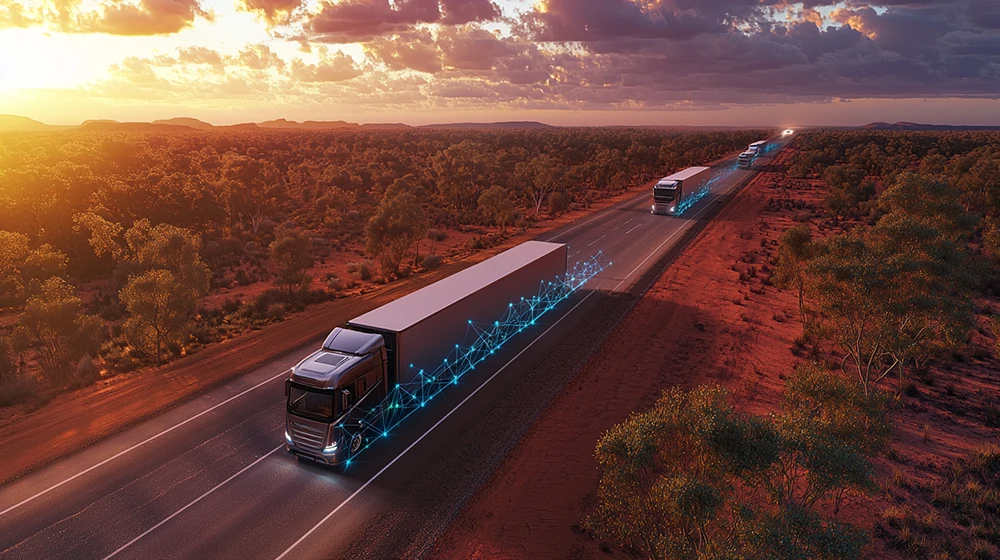
The Future Is Here: How Truck Platooning Will Revolutionize Australian Logistics

In the rapidly evolving landscape of transportation technology, Australia stands at the precipice of a logistics revolution. While much media attention focuses on self-driving passenger vehicles, a more immediate and potentially transformative development is emerging for our freight industry: truck platooning. This technology, which allows multiple trucks to travel in closely coordinated convoys with minimal human intervention, represents not just an incremental improvement but a fundamental reimagining of how goods move across our vast continent.

Australia’s Freight Challenge: A Growing Crisis

Australia’s freight task is enormous and growing at a staggering pace. According to the National Transport Commission, Australia currently moves approximately 5 million tonnes of freight daily, with road transport handling 70% of this massive volume. This dependency on road freight shows no signs of abating – projections from Infrastructure Australia indicate that road freight volumes will double by 2040, creating unprecedented pressure on our existing infrastructure and logistics capabilities.

Simultaneously, the Bureau of Infrastructure Transport and Regional Economics paints a sobering picture of our transport future, forecasting that without significant innovation, traffic congestion could cost the Australian economy a staggering $30 billion annually by 2030. This perfect storm of increasing freight demands and capacity constraints demands bold solutions.

Understanding Truck Platooning: Beyond Just Driverless Vehicles

Truck platooning represents a sophisticated blend of autonomous vehicle technology, advanced communication systems, and coordinated logistics. Unlike fully autonomous vehicles that operate independently, platooning creates a digitally tethered convoy where multiple trucks travel in close formation, typically with a human driver in the lead truck and semi-autonomous or fully autonomous systems controlling the following vehicles.

How Platooning Works

At its core, platooning relies on vehicle-to-vehicle (V2V) communication that enables trucks to synchronize their movements with millisecond precision. This system includes:

  1. Advanced Driver Assistance Systems (ADAS): Adaptive cruise control, lane-keeping assistance, and automated braking work in concert to maintain precise positioning.
  2. Dedicated Short-Range Communications (DSRC): Ultra-fast communication links between vehicles enable real-time coordination of acceleration, braking, and steering.
  3. Sensor Fusion: A combination of radar, lidar, cameras, and GPS creates a comprehensive environmental awareness that exceeds human perception capabilities.
  4. Central Control Systems: Sophisticated algorithms manage the entire platoon, optimizing spacing based on vehicle weight, road conditions, and traffic patterns.

This technological symphony allows trucks to safely maintain following distances as close as 15-20 meters at highway speeds – far closer than would be possible with human drivers alone.

Australia’s Platooning Progress: From Concept to Reality

While South Australia pioneered autonomous vehicle trials on Australian roads back in 2015, Victoria has emerged as a leader in freight-specific applications. The Victorian government, in partnership with Transport for Victoria and VicRoads, has announced plans for extensive platooning trials on key freight corridors. These trials will test both the technological viability and the infrastructure requirements for widespread deployment.

Other states are following suit. The Queensland Department of Transport and Main Roads has incorporated platooning into its Cooperative and Automated Vehicle Initiative (CAVI), while New South Wales’ Future Transport 2056 strategy explicitly identifies platooning as a key technology for freight efficiency.

Major Australian logistics companies haven’t been idle either. Toll Group and Linfox have both initiated partnerships with technology providers to explore platooning capabilities. Toll’s collaboration with Daimler Trucks has already seen limited testing of connected truck technology on closed courses, with plans to expand to controlled public road trials.

The Transformative Benefits of Platooning

The potential benefits of widespread truck platooning in Australia extend far beyond simple operational improvements, touching on economic, environmental, and safety considerations.

Economic Advantages

  1. Dramatic Efficiency Gains: Platooning could revolutionize interstate freight movement. Currently, a single B-double truck can transport approximately 30 tonnes of freight. Platoons of five or more connected trucks could move upwards of 150-200 tonnes in a single coordinated convoy, dramatically increasing freight capacity without proportionally increasing driver requirements.
  2. Reduced Labor Costs: With only the lead truck requiring a fully engaged driver, platooning addresses one of the industry’s most pressing challenges – the nationwide shortage of qualified heavy vehicle operators. The Australian Trucking Association estimates the industry faces a shortfall of nearly 40,000 drivers by 2030.
  3. Fuel Efficiency: The aerodynamic benefits of platooning are substantial. Research by the CSIRO suggests that following trucks in a platoon can achieve fuel savings of 10-15% due to reduced air resistance. For an industry where fuel represents approximately 30% of operating costs, these savings translate to millions of dollars annually.
  4. Increased Asset Utilization: Platooning technology could eventually enable longer operating hours, as follower trucks may be able to operate with drivers in rest periods while still maintaining safety and compliance with work hours regulations.

Environmental Benefits

  1. Reduced Emissions: The fuel efficiency gains directly translate to lower carbon emissions. The Department of Infrastructure, Transport, Regional Development and Communications estimates that optimized platooning could reduce CO₂ emissions from the heavy vehicle sector by up to 7 million tonnes annually by 2040.
  2. Reduced Congestion: By increasing the freight capacity per lane while maintaining or improving traffic flow, platooning reduces the total number of trucks needed on the road, helping alleviate congestion on critical freight corridors.
  3. Infrastructure Wear: More efficient movement of freight means less overall stress on road infrastructure, potentially extending the life of critical transportation assets.

Safety Improvements

  1. Elimination of Human Error: With approximately 80% of heavy vehicle accidents involving some form of human error, the automation aspects of platooning could significantly reduce accident rates. The reaction time of connected systems is measured in milliseconds, compared to the 1-2 seconds typical for human drivers.
  2. Consistent Behavior: Automated systems don’t experience fatigue, distraction, or impairment – factors that contribute to a significant percentage of heavy vehicle incidents.
  3. Advanced Collision Avoidance: The sensor systems used in platooning vehicles can detect hazards beyond human visual range, allowing for proactive rather than reactive safety management.

The Road Ahead: Challenges and Considerations

Despite its promising benefits, the path to widespread platooning adoption in Australia faces several significant hurdles that require thoughtful consideration and coordinated action.

Infrastructure Requirements

Australia’s road infrastructure will require substantial upgrades to fully support platooning technology. These include:

  1. Digital Infrastructure: Reliable, high-speed communication networks along major freight routes are essential for the V2V and vehicle-to-infrastructure (V2I) communications that platooning requires. Current coverage gaps in regional and remote areas present significant challenges.
  2. Smart Roads: Embedding sensors, communication beacons, and advanced traffic management systems into key freight corridors will enhance platooning safety and efficiency. However, the cost of these upgrades across Australia’s vast road network could run into billions of dollars.
  3. Specialized Lanes and Facilities: Dedicated platooning lanes on major highways and specialized staging areas where platoons can form and dissolve may become necessary to maximize benefits while minimizing disruption to other road users.
  4. Funding Mechanisms: The question of how to fund these infrastructure improvements remains contentious. Options include public-private partnerships, user charges specifically for platooning operations, or broader road user charging reforms.

Safety Concerns

While platooning promises safety improvements, it also introduces new risk scenarios that must be addressed:

  1. Catastrophic Failure Modes: A communication failure or sensor malfunction in a platoon traveling at highway speeds could potentially lead to multi-vehicle incidents of greater severity than typical single-vehicle accidents. Redundant safety systems and fail-safe protocols are essential.
  2. Interaction with Conventional Vehicles: Platoons will share roads with human-driven vehicles for the foreseeable future. The interaction between these different vehicle types, particularly around highway entrances and exits, presents complex safety challenges.
  3. Cyber Security: Connected vehicle systems are potentially vulnerable to hacking or other cyber attacks. Robust security protocols must be implemented to prevent malicious interference with platooning operations.
  4. Weather and Environmental Conditions: Australia’s diverse and often extreme weather conditions present challenges for sensor systems. Dust storms, heavy rain, and bushfire smoke can all impair the visibility sensors that platooning relies on.

Regulatory Framework

The existing regulatory environment was not designed with platooning in mind, creating several areas that require reform:

  1. Vehicle Standards: Current Australian Design Rules (ADRs) do not specifically address platooning technology. Updates are needed to ensure safety while enabling innovation.
  2. Driver Licensing and Certification: What qualifications will be required for operators of lead trucks versus following trucks? New licensing categories may be necessary.
  3. Work Hours and Rest Periods: Existing rules around driver work hours and mandatory rest periods will need reconsideration in light of the reduced active driving requirements in follower vehicles.
  4. Liability and Insurance: When accidents occur involving platoons, questions of liability become complex. Is the lead driver responsible? The technology provider? The fleet operator? Clear frameworks are needed.
  5. Cross-Border Consistency: For interstate platooning to function effectively, consistent regulations across state and territory borders are essential. The National Transport Commission is working toward this goal but significant harmonization challenges remain.

Technology Reliability

For platooning to gain widespread acceptance, the underlying technology must be exceptionally reliable:

  1. Communication Redundancy: Multiple backup systems for the critical vehicle-to-vehicle communications must be in place to ensure safety in case of primary system failure.
  2. Sensor Robustness: Sensors must function reliably in all Australian conditions, from the dust of the Nullarbor to the tropical downpours of Far North Queensland.
  3. Software Validation: The complex algorithms controlling platoon behavior require extensive testing and validation to ensure they respond appropriately in all potential scenarios.

The Timeline: When Will Platooning Become Mainstream?

Based on current development trajectories and planned trials, we can project a rough timeline for platooning adoption in Australia:

2023-2025: Controlled Trials and Regulatory Development

  • Limited platooning trials on specific corridors under controlled conditions
  • Development of initial regulatory frameworks and standards
  • Testing of infrastructure requirements and communication systems

2025-2028: Limited Commercial Deployment

  • First commercial platooning operations on major highways
  • Initially limited to two-truck platoons with drivers in both vehicles
  • Deployment of initial smart infrastructure on key freight routes

2028-2032: Expanded Operations

  • Three to five truck platoons becoming common on major interstate routes
  • Follower trucks operating with reduced driver engagement
  • Dedicated platooning lanes on busiest freight corridors

2032-2035: Mainstream Integration

  • Platooning becoming standard practice for long-haul freight
  • Integration with broader autonomous vehicle systems
  • Comprehensive smart road infrastructure on all major highways

Beyond 2035: Full Autonomy

  • Potential evolution from platooning to fully autonomous truck convoys
  • Integration with automated loading/unloading systems
  • Comprehensive redesign of freight logistics networks around autonomous capabilities

What This Means for Australian Businesses

The coming platooning revolution has significant implications for businesses throughout the Australian supply chain:

For Fleet Operators

  • Begin incorporating platooning compatibility into fleet renewal plans
  • Invest in driver training programs for platoon operation
  • Engage with trials and pilot programs to gain early experience

For Freight Forwarders and Logistics Companies

  • Plan for changing cost structures as platooning alters the economics of road freight
  • Develop strategies to leverage increased capacity and potential speed improvements
  • Consider how platooning might change optimal warehouse and distribution center locations

For Infrastructure Providers

  • Identify opportunities for smart infrastructure development
  • Prepare for changing patterns of rest area and refueling facility usage
  • Consider the implications of platoons for road design and traffic flow

For Technology Providers

  • Significant market opportunities exist in communications, control systems, and specialized hardware
  • Australian-specific solutions needed for unique conditions and regulatory environment
  • Partnership opportunities with established transport operators for real-world testing

Conclusion: Embracing the Platooning Future

Truck platooning represents a pivotal transition for Australian logistics – a step change that bridges today’s human-driven transport with tomorrow’s fully autonomous future. While the challenges are substantial, the potential benefits for efficiency, safety, and environmental impact make it an innovation worth pursuing aggressively.

Rather than fearing the disruption, Australian transport operators and logistics companies should be actively engaging with the development of this technology. Those who participate in early trials, contribute to regulatory discussions, and begin planning for platooning integration will be best positioned to capture the competitive advantages it offers.

The question isn’t whether platooning will transform Australian road freight – it’s how quickly the transformation will occur and who will lead it. As trials expand and technology matures, the window for early adopter advantages narrows. For forward-thinking companies in the logistics sector, the time to engage with platooning is now.

Our vast distances, concentrated population centers, and heavy reliance on road freight make Australia an ideal candidate for platooning technology. With thoughtful implementation, robust safety standards, and appropriate infrastructure investment, truck platooning has the potential to revolutionize how goods move across our continent, delivering economic and environmental benefits for decades to come.

Additional Resources

For those interested in learning more about truck platooning in Australia, these authoritative sources provide valuable insights:

Driving Forward: Transformative Technologies Reshaping the Transport Industry Over the Last Decade

The transport and logistics sector has undergone a remarkable transformation over the past decade, evolving at a pace that would have been difficult to imagine just ten years ago. From intelligent navigation systems and electric powertrains to autonomous technologies and digital freight platforms, innovations have fundamentally altered how goods and people move across Australia and around the world.

As we look toward the future of transportation, it’s worth reflecting on the key technological advancements that have reshaped the industry. These innovations haven’t merely improved existing systems—they’ve completely reimagined what’s possible in transport efficiency, sustainability, and service.

Smart Navigation and Route Optimization

A decade ago, GPS navigation was already common in the transport industry, but the systems were relatively basic by today’s standards. Drivers relied on dedicated GPS devices that provided simple turn-by-turn directions with limited real-time traffic data.

From Basic Mapping to Intelligent Navigation

Modern navigation systems have evolved far beyond their predecessors, incorporating:

  • Real-time traffic analysis that uses data from millions of vehicles to predict congestion
  • Dynamic rerouting that automatically adjusts to changing road conditions
  • Weather impact modeling that anticipates how environmental factors will affect journey times
  • Vehicle-specific routing that accounts for height, weight, and cargo restrictions
  • Fuel-optimized path planning that minimizes consumption based on topography and traffic flow

For transport companies, these advancements have translated into measurable benefits. Studies show that advanced route optimization can reduce fuel consumption by 15-20% and increase delivery capacity by up to 25% without adding vehicles to the fleet.

Australian logistics company Toll Group reported that implementing AI-powered route optimization across their fleet resulted in a 12% reduction in kilometers traveled while maintaining the same delivery volume—a significant achievement in both cost reduction and environmental impact.

Electrification of Transport

The past decade has witnessed the beginning of a fundamental shift in how vehicles are powered, with electric vehicles (EVs) moving from experimental curiosities to mainstream transport options.

Commercial Electric Vehicles Come of Age

In 2013, electric trucks were largely confined to concept vehicles and small pilot programs. Today, manufacturers from Volvo and Daimler to Tesla and emerging players like SEA Electric in Australia offer commercial electric vehicles across various weight classes and applications.

This transformation is particularly evident in several areas:

  • Last-mile delivery: Major courier companies including Australia Post have deployed electric delivery vans for urban operations, with Australia Post now operating over 3,000 electric delivery vehicles
  • Public transport: Cities like Sydney and Melbourne have committed to transitioning their bus fleets to electric, with hundreds of electric buses already in service
  • Medium-duty trucks: Companies like Woolworths and Coles have begun introducing electric trucks for regional distribution
  • Heavy transport: Pilot programs for electric long-haul trucks are underway on key routes like Melbourne to Sydney

The economics of electric transport have changed dramatically over this period. Battery costs have fallen by approximately 89% since 2010, according to BloombergNEF, while energy density has more than doubled. For fleet operators, this has reduced the total cost of ownership gap between electric and diesel vehicles, with some applications now reaching cost parity.

Autonomous and Driver Assistance Technologies

While fully autonomous vehicles operating without human supervision remain a goal for the future, the past decade has seen remarkable progress in advanced driver assistance systems (ADAS) and limited autonomy.

From Driver Support to Partial Automation

The evolution of autonomous capabilities in transport has followed a step-by-step progression:

  • 2013-2015: Basic driver support features like adaptive cruise control and lane departure warnings became standard in commercial vehicles
  • 2016-2019: More advanced systems including automatic emergency braking and lane-keeping assistance were widely deployed
  • 2020-2023: Partial automation featuring hands-free highway driving and automated yard operations emerged in commercial applications

Australian mining companies have been at the forefront of autonomous vehicle deployment, with Rio Tinto operating over 130 autonomous haul trucks across their Pilbara operations. These vehicles have moved more than 4 billion tonnes of material and demonstrated a 15% improvement in productivity compared to human-operated equipment.

On public roads, the progress has been more measured but still significant. Companies like Toll Group and Linfox have implemented driver assistance technologies across their fleets, contributing to a reported 60% reduction in certain types of accidents.

Platooning Pilot Programs

Truck platooning—where multiple trucks travel in close formation using connected technology—has moved from concept to reality during this period. This approach combines human driving with automation to improve fuel efficiency and safety.

Key platooning trials in Australia have included:

  • Transport for NSW’s Connected and Automated Vehicle Initiative testing platoons on the Hume Highway
  • A Cooperative Research Centre project evaluating platooning benefits for the Australian road network
  • Port of Brisbane trials examining the potential for platooning in port operations

Early results suggest fuel savings of 7-10% for following vehicles in a platoon, with corresponding reductions in emissions.

Digital Freight Platforms and Marketplaces

Perhaps the most disruptive change in transport over the past decade has been the digitization of freight booking and management. Traditional processes involving phone calls, emails, and paperwork have been rapidly replaced by digital platforms.

The Uberization of Freight

Digital freight platforms have transformed how shippers and carriers connect:

  • Load matching marketplaces like Freight Exchange and Loadshift have created more efficient markets for connecting available capacity with freight needs
  • Specialized service platforms such as Find A Mover have revolutionized how consumers and businesses connect with professional moving services, bringing transparency and efficiency to what was once a fragmented market
  • Real-time pricing models have replaced static rate cards, allowing for dynamic adjustment based on demand and capacity
  • Visibility platforms provide end-to-end tracking of shipments across multiple carriers and modes
  • Digital documentation has reduced paperwork and administrative costs while improving accuracy

The impact has been particularly significant for small to medium carriers, who can now access freight opportunities that were previously difficult to source. For shippers, these platforms have increased choice and typically reduced costs through more competitive bidding.

For consumers moving homes or offices, platforms like Find A Mover have transformed the experience from a stressful, time-consuming process of collecting quotes to a streamlined digital experience that matches requirements with qualified professionals in minutes.

Australian startup Ofload (formerly Loadsmile) reported connecting over 15,000 carriers with shippers since their 2020 launch, while reducing empty running by approximately 30% for participating vehicles—a win for both business efficiency and environmental sustainability.

Internet of Things (IoT) and Connected Vehicles

The proliferation of affordable sensors and connectivity has created the “connected vehicle”—a rolling data center that provides unprecedented visibility into vehicle performance, driver behavior, and cargo conditions.

From Periodic Inspections to Continuous Monitoring

A decade ago, fleet managers relied primarily on scheduled maintenance and driver reports to understand vehicle status. Today’s connected transport systems provide:

  • Real-time engine diagnostics that can predict failures before they occur
  • Driver behavior monitoring that identifies opportunities for coaching and improvement
  • Cargo condition tracking including temperature, humidity, and shock monitoring
  • Fuel efficiency analytics that identify wasteful practices or vehicle issues
  • Safety system monitoring that ensures critical systems are functioning properly

Major Australian fleets now generate terabytes of vehicle data annually, with sophisticated analytics systems translating this information into actionable insights. Companies report maintenance cost reductions of 15-30% through predictive approaches, while also experiencing fewer on-road breakdowns and extended vehicle lifespans.

Cold Chain Innovation

For temperature-controlled transport, IoT advances have been particularly valuable. Modern refrigerated transport now features:

  • Continuous temperature logging with cellular and satellite transmission
  • Automated alerts when conditions approach acceptable limits
  • Remote adjustment of refrigeration settings
  • Blockchain-verified temperature records for regulatory compliance

These capabilities have significantly reduced product loss in transit while ensuring food safety and pharmaceutical efficacy.

Mobile Workforce Solutions

The smartphone revolution has transformed how transport workers interact with information systems, creating new possibilities for productivity and service.

From Paper to Digital Workflows

Transport operations that once relied on paper manifests, delivery dockets, and timesheets have been revolutionized by mobile applications:

  • Electronic proof of delivery with signature capture, photos, and GPS verification
  • Dynamic dispatch that updates driver tasks in real-time based on conditions
  • Turn-by-turn navigation optimized for specific vehicle characteristics
  • Digital pre-trip inspections that ensure compliance and safety
  • Hours of service tracking that helps manage fatigue and regulatory compliance

These mobile solutions have created measurable efficiency gains. Research by Transport Certification Australia indicates that digital workflows reduce administrative time by approximately 1.5 hours per driver per day—time that can be redirected to additional deliveries or improved service.

For customers, these systems have dramatically improved visibility. Where they once wondered when a delivery might arrive, they can now track their shipment in real-time and receive accurate ETAs based on current conditions.

Data Analytics and Artificial Intelligence

The transport industry has become increasingly data-driven over the past decade, with advanced analytics and AI transforming how decisions are made.

From Gut Feel to Data-Driven Decisions

Modern transport operations leverage data in ways that weren’t possible ten years ago:

  • Predictive demand modeling that anticipates freight volumes and patterns
  • Dynamic pricing algorithms that optimize rates based on market conditions
  • Resource allocation systems that match equipment and personnel to demand
  • Risk prediction models that identify potential safety issues before incidents occur
  • Sustainability analytics that target emissions reduction opportunities

The Australian company Teletrac Navman has helped transport operators implement AI-powered analytics that reduced fuel consumption by up to 30% through a combination of route optimization, driver coaching, and vehicle performance monitoring.

For strategic planning, these capabilities have proven equally valuable. Major transport providers now use advanced simulations to evaluate network designs, test different fleet configurations, and optimize warehouse locations.

Sustainable Transport Innovations

Environmental considerations have become increasingly central to transport operations over the past decade, driving innovations beyond vehicle electrification.

Beyond Alternative Fuels

While electric vehicles have captured headlines, other sustainable transport innovations have made significant impacts:

  • Aerodynamic improvements including trailer skirts, boat tails, and gap reducers that can improve fuel efficiency by 5-15%
  • Lightweight materials in vehicle construction that reduce fuel consumption and increase payload capacity
  • Regenerative braking systems that recover energy during deceleration
  • Solar-powered refrigeration units that reduce engine idling for temperature control
  • Tire pressure monitoring and automatic inflation systems that optimize rolling resistance

These technologies often offer quicker returns on investment than full vehicle replacement, allowing operators to reduce their environmental impact while transitioning to zero-emission fleets.

Australian company Vawdrey has introduced aerodynamic trailer designs that demonstrate fuel savings of up to 10% in long-haul applications, while also increasing cubic capacity through innovative loading systems.

Last-Mile Innovation

The growth of e-commerce has made last-mile delivery one of the most dynamic areas of transport innovation over the past decade.

Reimagining Urban Delivery

The challenges of urban delivery have sparked numerous technological solutions:

  • Micro-fulfillment centers that position inventory closer to customers
  • Cargo bikes and small electric vehicles for congested urban areas
  • Parcel lockers and collection points that consolidate deliveries
  • Route density optimization that minimizes distance between stops
  • Delivery time window prediction with accuracy measured in minutes rather than hours

Companies like Sendle have built their business models around sustainable last-mile solutions, demonstrating that environmental responsibility can align with commercial success. Their carbon-neutral delivery approach has proven particularly appealing to small businesses with environmentally conscious customers.

The Future: Converging Technologies

Looking ahead, the transport technologies that have emerged over the past decade are beginning to converge in ways that promise even greater transformation:

  • Autonomous electric vehicles combining zero emissions with automated operation
  • Drone delivery integrated with traditional transport for specialized applications
  • Mobility-as-a-Service (MaaS) platforms that seamlessly combine passenger and freight transport
  • Digital twins of transport networks enabling sophisticated scenario planning
  • Blockchain-verified sustainable supply chains that document environmental credentials

Conclusion: The Road Ahead

The technological advances of the past decade have fundamentally altered the transport landscape, creating new possibilities for efficiency, sustainability, and service. For transport operators, these innovations have transformed competitive dynamics, with technology capabilities increasingly determining market success.

As we look to the future, the pace of change shows no signs of slowing. The companies that thrive will be those that continue embracing technological innovation—not just adopting new tools, but reimagining how transport and logistics can work in an increasingly connected, automated, and sustainable world.

The transport industry has always been essential to economic prosperity, but the technological revolution of the past decade has made it more dynamic and innovative than ever before. From autonomous systems and electrification to digital platforms and advanced analytics, technology has created a foundation for a transport future that is more efficient, sustainable, and responsive to changing needs.

The journey of transformation continues, and for those in the transport sector, the road ahead promises to be as exciting as it is challenging.